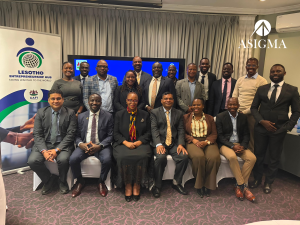
Following a period of collaboration and programme design, ASIGMA, together with key consortium partners, converged to launch the Vision Initiative for Sustainable Agriculture (VISA) Programme, an initiative designed to strengthen agricultural value chains and expand market access for farmers in Uganda.
The programme brings together a consortium of partners including the Embassy of the Kingdom of the Netherlands (Lead Programme Funder), Vision Group (Host of the VISA programme), Strategic Advisory and Research Consulting Limited (SARC), and Netherlands-based EMSA Emerging Markets Africa. Through this collaboration, the partners aim to address structural constraints within Uganda’s agricultural sector whilst supporting the transition towards a more productive, commercially viable and market-oriented agricultural ecosystem.
The Embassy of the Kingdom of Netherlands has committed UGX 4.14 billion (EUR €1 million) over the next four years to support this initiative, helping create investment opportunities, boost trade, and strengthen economic growth in Uganda.
Addressing structural barriers in Uganda’s agricultural economy through the VISA Programme model
Agriculture remains central to Uganda’s economy and regional food systems; the sector employs approximately 65 percent of the population and contributes nearly a quarter of national GDP. As of 2025, Uganda is among Africa’s leading coffee exporters, generating close to US$1.7 billion from the crop. With favourable climatic conditions and significant agricultural resources, the country has the potential to feed more than 200 million people across the region.
Despite this strong foundation, smallholder farmers continue to face structural barriers that limit productivity and participation in higher-value markets. These include limited mechanisation, insufficient irrigation, fragmented value chains and restricted access to finance and market information.
The VISA Programme seeks to address these challenges through a coordinated partnership model that strengthens knowledge sharing, promotes agricultural innovation and improves linkages between farmers and markets. By working across multiple actors in the agricultural ecosystem, the initiative aims to enhance productivity, expand trade opportunities and support the long-term sustainability of agricultural enterprises.
“To ensure that programme’s impact is measurable and transparent, the programme will utilise Strive as its monitoring and evaluation tool. Strive is an M&E tool developed by ASIGMA will enable tracking of agreed targets, providing real-time visibility for partners and embedding a culture of accountability.” – Kevin Abuka, Manager, Investment Advisory ASIGMA
ASIGMA’s Strategic Contribution: Enabling measurable impact through evidence-driven delivery
Within this partnership, ASIGMA will lead strategic advisory support, sector research and market intelligence to guide programme implementation and strengthen agricultural value chains. Drawing on its experience in market systems development and advisory services, the firm will work with programme partners to identify opportunities that improve farmer productivity, strengthen market linkages and enhance the competitiveness of Uganda’s agricultural sector.
ASIGMA will further participate in the programme’s Steering Committee alongside other implementing partners, where the committee will provide strategic oversight and coordination for programme activities whilst ensuring interventions remain informed by sector insights and aligned with the programme’s broader development objectives.
What lies ahead
The VISA Programme reflects a growing recognition that sustainable agricultural transformation requires coordinated action across multiple stakeholders. By combining advisory expertise, sector knowledge and implementation capacity, the partnership aims to strengthen Uganda’s agricultural ecosystem while positioning the country as an increasingly important contributor to Africa’s food systems.
As the programme evolves, partners will continue working collaboratively to support farmers, improve market participation and unlock the broader potential of agriculture as a driver of inclusive economic growth.growth in Uganda.