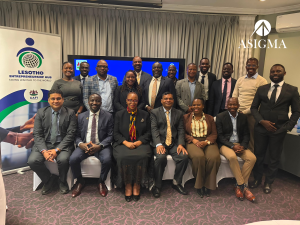
ASIGMA alongside key consortium partners and stakeholders including the Bank of Uganda, the Ministry of Finance, Planning and Economic Development, and the Ministry of Trade, Industry and Cooperatives, and others, convened for a dissemination workshop hosted by Financial Sector Deepening Uganda, where new evidence on Micro Small and Medium Enterprises (MSE) resilience, credit use, and post-pandemic recovery in Uganda was presented and discussed.
Conducted in 2025 under the Mastercard Foundation Micro and Small Enterprises (MSE) Recovery Fund initiative, the Resilience and Survivability Survey is a longitudinal follow-up to the 2023 baseline study. It tracks how supported MSEs through the Fund have recovered, adapted, and grown over time, examining business continuity, credit utilisation, coping strategies, profitability, and employment outcomes.
New evidence presented shows that the programme kept most beneficiary enterprises alive after COVID-19, but converting survival into sustained growth remains uneven across sectors and groups. Overall, key findings highlight that product design, repayment cadence and targeted non-financial support are the difference between stagnation and meaningful expansion.
ASIGMA, as Facility Manager on the programme, leveraged its portfolio monitoring tool and data quality systems to generate granular disbursement and impact insights across key beneficiary segments including young women, youth, refugees, Persons with Disabilities (PWDs), loan types, and overall enterprise performance trends. These structured analytics directly informed the final report outputs, strengthening the evidence base behind the Fund’s performance narrative. The study tracked the same group of enterprises from 2023 through 2025 to generate a rare, evidence-based view of post-pandemic trajectories.
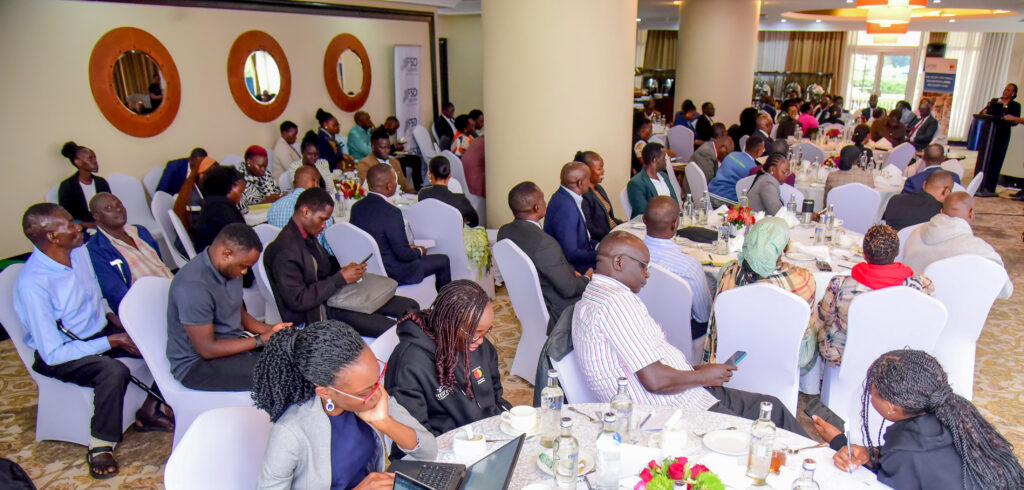
Highlights from the report and workshop discussions
1. High Survival Vs. Unequal and concentrated growth
The survey found very high survivability among supported enterprises. Nearly all businesses in the tracked sample remained operational, however, expansion was concentrated in only a few sectors.
Profit improvements were most pronounced in manufacturing and trade, while agriculture and several service sub-sectors lagged. The findings depicted a sharp decline in enterprises’ exposure to acute financial crisis (from 97% in 2023 to 81% in 2025) but stressed that survival did not automatically translate to growth.
Equity gaps persist. Young women (18–34), refugee entrepreneurs and persons with disabilities (PWDs) underperformed peers by significant margins. Young women earned 29–63% below sector averages, refugee-owned enterprises earned 54–60% less, and PWD performance was notably weak in agriculture. The findings underline that blanket liquidity is insufficient without targeted product and delivery adjustments.
2. Repayment design matters more than ticket size
One key finding is that repayment cadence aligned to enterprise cash flows drives outcomes. Enterprises on flexible or cash-flow-matched repayment schedules (quarterly or custom timetables) reported nearly three times higher profit growth than peers on rigid monthly or weekly schedules.
This effect was strongest in longer-cycle operations such as certain agricultural and agro-processing activities.
A standout takeaway is this: aligning repayment timing with cash‑flow cycles gives enterprises room to invest, rebuild stock, and steer clear of distress sales.
3. Credit use patterns: Working capital up, asset investment down
The survey findings marked shift toward short-term working capital use. Most credit disbursed was applied to meet immediate liquidity and stock needs rather than asset purchases. Asset investment declined from 20% of use cases in 2023 to under 10% in 2025, signaling that enterprises prioritised continuity over longer-term scaling.
Stakeholders argued this pattern slows structural upgrading and recommended blended instruments to pair immediate liquidity with incentives for productive investment.
What needs to change: Policy and Practice Recommendations
Following the presentations and stakeholder discussions from both the public and private sectors, a focused set of actionable recommendations and practical insights was delivered.
- Design loans around cash flows. PFIs should test quarterly or custom repayment schedules for seasonally cyclical businesses.
- Blend finance and advisory. Business development services (BDS) must accompany credit to convert working capital into durable gains.
- Targeted inclusion measures. Risk-sharing, attestation or group-guarantee models can lower barriers for refugees and PWDs.
- Invest in digital enablement and infrastructure. Policymakers and market actors should reduce cost and connectivity frictions that limit digital channels’ effectiveness.

Conclusion: What next?
The findings through the entire discussion shift toward a key insight: resilience cannot be achieved through capital alone. Stakeholders need to pair catalytic liquidity with product redesign, complementary advisory services, and public risk-sharing to reach the Fund’s inclusion goals, especially for young women, refugees and PWDs.
The workshop closed with a collective mandate to translate the survey’s granular findings into operational pilots in the Fund’s final year.