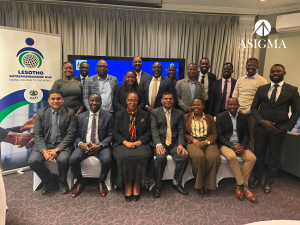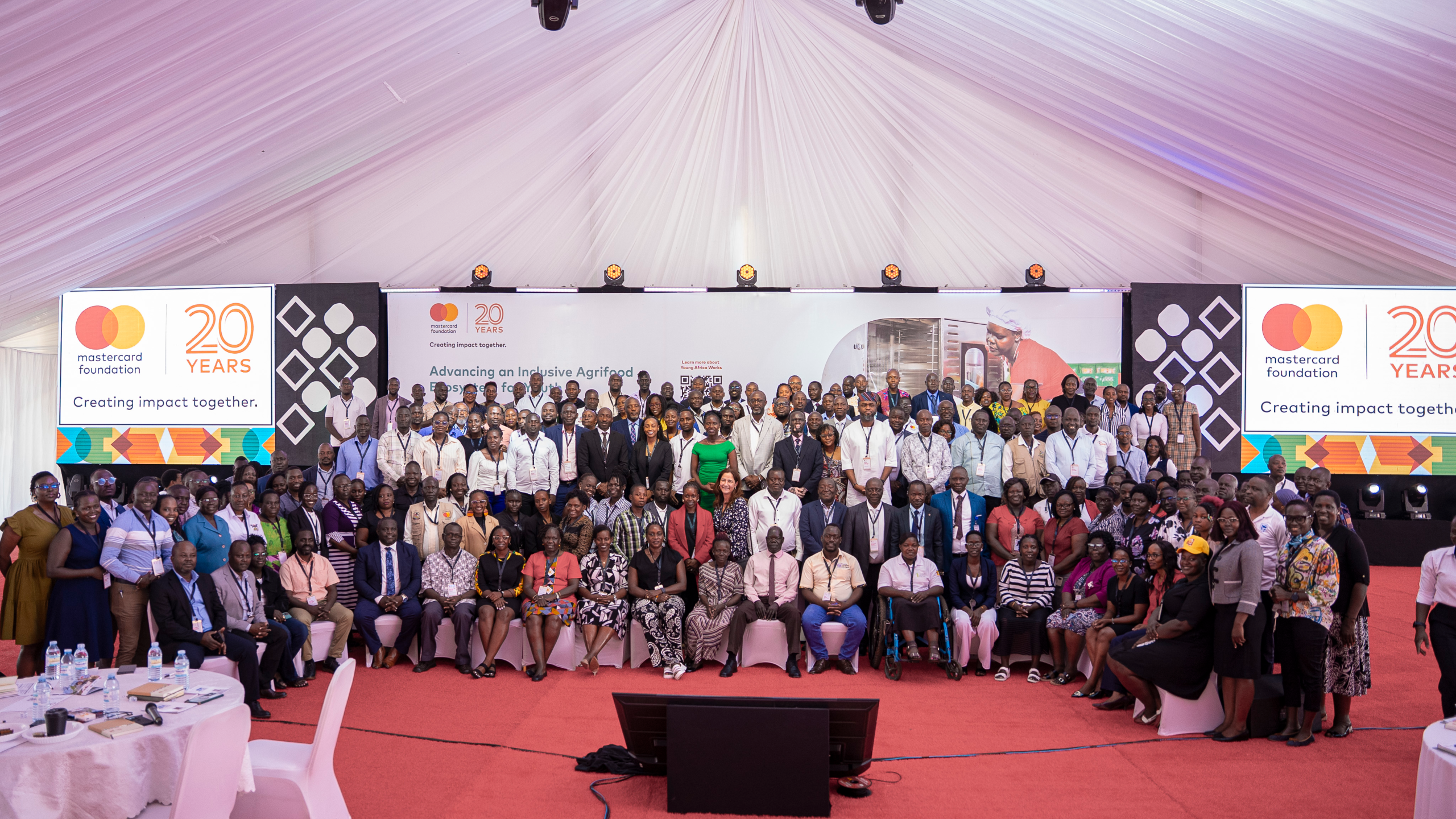
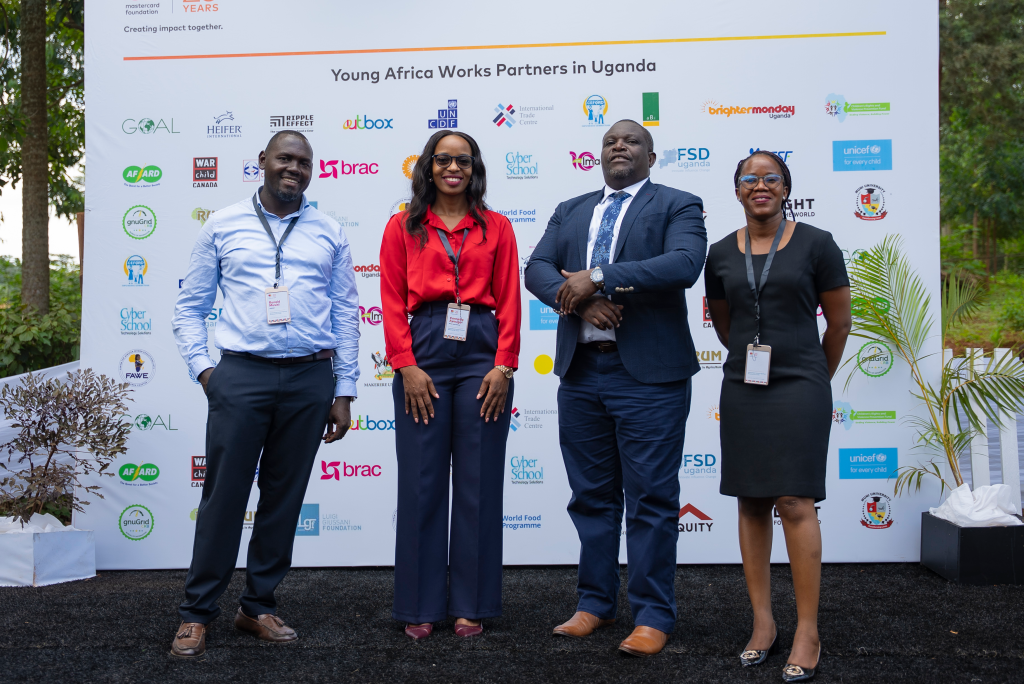
ASIGMA alongside key consortium partners and stakeholders convened at the Young Africa Works Dialogue 2026, a platform co-organised by Heifer International Uganda in partnership with the Mastercard Foundation, bringing together actors across Uganda’s agrifood ecosystem to reflect on progress, share insights and identify practical pathways to strengthen youth participation in agriculture.
Held in Jinja, the Dialogue convened development partners, financial institutions, ecosystem support organisations, cultural institutions, and young entrepreneurs from across Africa. The discussions centred on how ongoing interventions are translating into sustainable livelihoods, enterprise growth and long-term participation of young people in agribusiness.
The Dialogue was held under the theme: Advancing an Inclusive Agri-food Ecosystem for the Youth, reflecting a growing recognition that expanding youth participation in agriculture requires more than access to opportunities, it requires systems that enable productivity, market access and enterprise growth. This aligns with the broader Young Africa Works strategy, which seeks to enable 30 million young people, particularly women, to access dignified and fulfilling work by 2030.
The roadmap to unlocking Africa’s agrifood ecosystem potential: Progress made under the SAYE Programme
The Dialogue also reflected on progress under the Stimulating Agribusiness for Youth Employment (SAYE) programme, implemented by Heifer International Uganda in partnership with the Mastercard Foundation across the Busoga sub-region.
A key area of progress highlighted was the strengthening of access to finance through the SAYE Credit Fund. As Fund Manager, ASIGMA has supported the design and operationalisation of the facility; working through SACCOs and community-based financial institutions to deliver financing models that are better aligned to the realities of youth-led agribusiness. This includes onboarding and strengthening SACCOs such as NAGRO, where tailored financial products and flexible repayment structures are expanding access to finance for young people.
“What we are seeing is that access to finance becomes meaningful when it is embedded within the realities of how young people work; financing must move with production cycles, with market access and with the structures that support youth to participate and grow within value chains.” – Ronald Musisi, Technical Lead, SAYE Programme, ASIGMA
To date, the programme has reached over 90,000 young people with work-enabling interventions, with more than 58,000 currently engaged in work, the majority of whom are young women. These efforts span enterprise development, value chain support and ecosystem strengthening across priority agricultural value chains.
While progress has been made in expanding participation, discussions at the Dialogue emphasised the need to strengthen pathways toward commercialisation, improve productivity and enable more consistent access to markets.
Gaps and Goals: Insights and Learnings from the Young Africa Works Dialogue
1. Participation is increasing, but scale remains constrained
Agriculture remains a central pillar of Uganda’s economy, contributing approximately 24 percent to national GDP and employing more than 65 percent of the population. It continues to serve as one of the most accessible entry points for youth employment, particularly in rural and peri-urban areas where alternative opportunities remain limited.
However, while participation in agriculture is expanding across programmes and value chains, this growth has not consistently translated into commercially viable enterprises. Many young people are entering the sector, yet fewer are able to scale beyond subsistence or early-stage activity.
This reflects a broader structural challenge within the agrifood system; productivity gaps, limited value addition and weak market integration continue to constrain enterprise growth. Without deliberate efforts to strengthen these systems, increased participation alone will not translate into sustained economic outcomes for young people.
2. Financing models remain misaligned with agricultural realities
Access to finance emerged as a persistent constraint, particularly for youth-led enterprises. Stakeholders emphasised that traditional lending structures often do not align with agricultural production cycles, limiting the ability of young people to invest, manage risk and scale their activities within value chains.
Beyond financing itself, stakeholders highlighted broader barriers including limited collateral, high perceived risk by financial institutions and gaps in financial literacy. At the same time, solutions centred on flexible repayment models, group-based lending structures and embedding finance within ecosystem platforms such as SACCOs and agrihubs.
“The two main barriers for youth are lack of financial literacy on loan processes and the absence of land titles. Young people in my community are given land by parents without formal documentation. Banks must recognize this reality.” – Namukhose Sylvia, youth beneficiary
3. Ecosystem coordination is critical to unlocking outcomes
A key takeaway from the Dialogue is that outcomes are shaped not by individual interventions, but by how effectively different components of the ecosystem operate together.
Fragmentation across initiatives continues to limit impact; stronger coordination between development partners, financial institutions, private sector actors and local structures is required to unlock meaningful results. Strengthening linkages between finance, market access, skills development and aggregation structures remains central to enabling youth to transition into viable agribusiness.
4. Innovation must be grounded in local realities
The Dialogue highlighted the growing role of youth-led innovation in addressing production and market challenges across the agrifood system. Young people are already developing practical, locally relevant solutions; however, access to testing platforms, financing and visibility remains limited.
There is a clear need to strengthen incubation pathways, support early-stage innovation and create structured opportunities for local solutions to scale within the broader ecosystem.
5. Inclusion requires deliberate and targeted approaches
While youth participation is increasing, inclusion is not automatic. Young women, rural youth and other underserved groups continue to face structural barriers related to access to land, finance and market opportunities.
Addressing these gaps requires intentional programme design; including tailored financial products, targeted capacity building and delivery models that reflect the lived realities of different youth segments.
“Together, we can build an agri-food ecosystem where young people are not merely participants, but leaders, innovators, employers and architects of Uganda’s economic transformation.” – William Matovu, Country Director, Heifer International Uganda.
ASIGMA’s role in advancing access to finance within the agrifood ecosystem.
Access to finance emerged as a central constraint across discussions, particularly for youth-led enterprises operating within agricultural value chains.
Through its role as Fund Manager of the SAYE Credit Fund, ASIGMA supports the design and deployment of financing models that respond to these constraints, working through SACCOs, cooperatives and agrihub structures to extend access to finance for young entrepreneurs.
The approach reflects a broader shift highlighted during the Dialogue, the need to align financing with agricultural production cycles and embed it within existing ecosystem structures, rather than treating finance as a standalone intervention.
Conclusion: What next?
The Young Africa Works Dialogue 2026 reaffirmed the central role of agriculture in driving youth employment and economic transformation.
While progress has been made, sustained impact will depend on stronger coordination across ecosystem actors, more responsive financial systems and continued investment in scalable models that enable young people to participate meaningfully in agribusiness.
The Dialogue concluded with a shared emphasis on translating these insights into practical, scalable interventions that strengthen Uganda’s agrifood ecosystem and expand opportunities for youth across the region.