As a critical enabler of the global response to climate change, climate finance is constrained less by ambition and more by execution. While governments announce net-zero targets and regulatory reforms, the capital required to fund these commitments continues to lag behind the urgency of climate action and the scale of investment needed to deliver it.
Despite growing momentum, the climate finance gap remains wide. The Independent High-Level Expert Group (IHLEG) estimates that emerging markets and developing countries will require about US$ 2.4 trillion annually by 2030 to achieve the goals of the Paris Climate Agreement, a figure that far exceeds existing levels of investment in climate priorities such as clean energy, adaptation and sustainable agriculture.
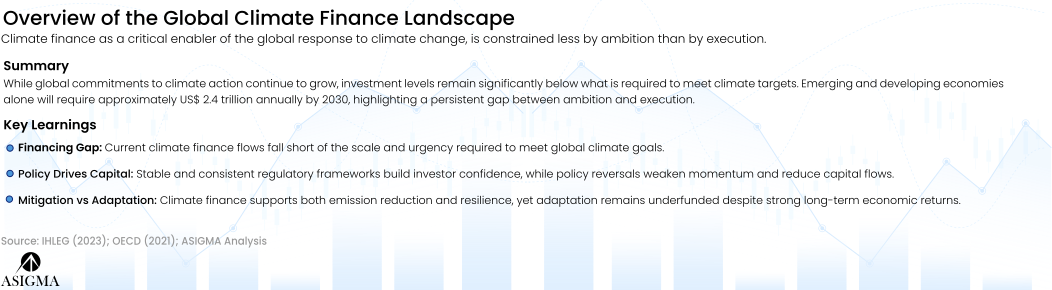
Overview of the Global Climate Finance Landscape
Globally, the effectiveness of climate finance is closely tied to policy credibility and regulatory stability. Clear, consistent frameworks give investors confidence and unlock private capital, while policy reversals undermine momentum. This is particularly important because climate projects often require significant upfront investment and long payback periods, making investors highly sensitive to regulatory uncertainty.
Climate finance operates across two complementary fronts: mitigation and adaptation. Mitigation seeks to reduce future climate risks by lowering greenhouse gas emissions and accelerating the transition to a low-carbon economy. Adaptation, in turn, focuses on managing the unavoidable climate impacts through strengthening the resilience of communities, infrastructure, and economies to climate-related shocks and stresses. Whereas mitigation activities address immediate climate-related challenges, adaptation offers long term, sustainable solutions. A 2021 outlook from the Organization for Economic Co-operation and Development(OECD) stated that every dollar invested in climate adaptation can generate up to four dollars in economic benefits through avoided losses and improved productivity.
Illustration 1
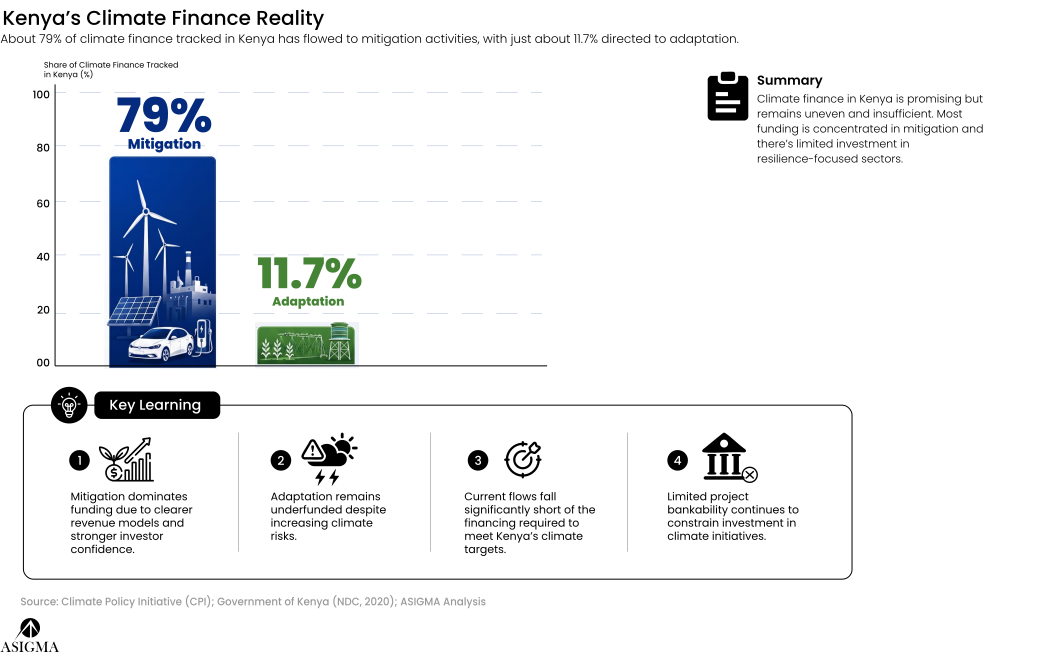
Kenya’s Climate Finance Reality
In Kenya, climate finance remains concentrated in mitigation, particularly renewable energy generation such as geothermal and solar. Adaptation investments central to long-term resilience in agriculture, forestry, transport, and water systems remain comparatively underfunded. About 79% of climate finance tracked in Kenya has flowed to mitigation activities, with just about 11.7% directed to adaptation.
According to the Climate Policy Initiative’s Landscape of Climate Finance in Kenya, total climate finance tracked in 2018 amounted to approximately US$2.4 Billion. While significant, this represents only a fraction of what is required annually to meet Kenya’s long-term climate objectives.
In its updated Nationally Determined Contribution (NDC) submitted in December 2020, the Government of Kenya estimated that approximately US$62 billion would be required between 2020 and 2030 to implement its climate mitigation and adaptation commitments. The scale of current flows therefore remains insufficient relative to the country’s development and resilience needs.
At the heart of the climate finance gap is bankability. Bankable projects are those that present an acceptable risk–return profile, supported by predictable cash flows, manageable risks, and a credible pathway to repayment. While taxonomies, disclosure frameworks, and national climate strategies help signal intent and guide capital, they do not automatically translate into investable opportunities. With the contrast between current flows and projected needs highlighting a substantial financing gap, the central question becomes, can Kenya turn regulations into an investable pipeline of bankable climate deals?
Illustration 2
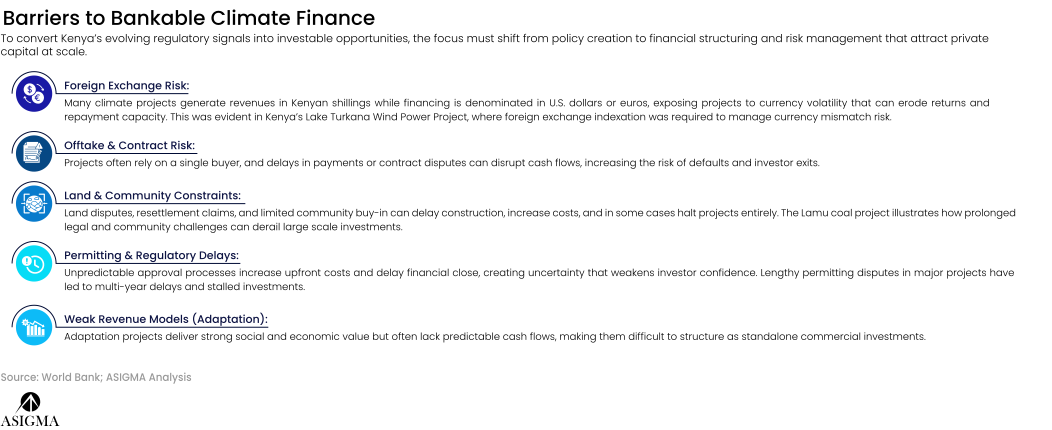
Barriers to Bankable Climate Finance Projects
Climate change poses a material risk to economic stability. Extreme weather events, rising temperatures, and environmental degradation are disrupting supply chains, infrastructure, and livelihoods. A World Bank Group press release estimated that without decisive climate action, climate change could push over 100 million people into poverty by 2030, with developing economies bearing the brunt of the impact. In Kenya, climate inaction could reduce the country’s real GDP by between 3.61% and 7.25% by 2050.
Against this backdrop, the challenge of translating climate policy into bankable investments continues to linger and is shaped by a set of recurring, deal-level constraints that continue to limit private capital participation. These include:
- Foreign Exchange Risk: Many climate projects generate revenues in Kenyan shillings while financing is denominated in U.S. dollars or euros. Currency volatility can significantly erode returns and debt service capacity, making projects unattractive to lenders unless supported by hedging instruments, guarantees, or concessional capital. This risk was evident in Kenya’s Lake Turkana Wind Power project, one of Africa’s largest wind farms, which raised the majority of its financing in U.S. dollars while earning revenues in Kenyan shillings. To reduce currency mismatch risk, the tariff incorporated foreign exchange indexation, allowing portions of the payment structure to adjust in line with US movements, improving lender confidence.
- Offtake & contract risk: Many projects rely on a single buyer (often a utility or county entity). If that counterparty delays payments, disputes invoices, or seeks to renegotiate tariffs, the project’s cashflows can fail overnight, triggering debt defaults, expensive bridge financing, or investor exits. In Kenya, payment backlogs and contract disputes have repeatedly raised the cost of capital and slowed new closes.
- Land acquisition & community consent: Even a “bankable” project can stall if land rights are contested or community buy-in is weak. Tenure disputes, resettlement claims, and local opposition can delay construction for years, inflate costs, and invite court injunctions, sometimes killing the project entirely. Kenya’s Lamu coal plant faced prolonged legal and community challenges that ultimately derailed it.
- Permitting and regulatory timelines: Lengthy and unpredictable approval processes increase upfront development costs and delay financial close. Uncertainty around permitting timelines weakens investor confidence and complicates project scheduling and capital deployment. The Lamu coal power project faced prolonged permitting disputes and court challenges over environmental approvals that led to years of delays and ultimately stalled the project.
- Weak revenue models for adaptation investments: While adaptation projects such as flood control, water resilience, and climate-smart agriculture deliver strong economic and social benefits, they often lack clear, predictable cash flows. This makes the projects difficult to structure as standalone commercial investments without blended finance or public support.
Whereas these risks are alive, Kenya has made notable progress in mitigation, particularly through investments in geothermal and solar energy that position it as a regional clean energy leader. However, agriculture, water systems, transport infrastructure, and urban settlements remain highly exposed to climate shocks. Further emphasising the need to prioritise adaptation finance for areas such as drought-resilient agriculture, flood control, and climate-proof infrastructure remains limited.
Illustration 3
New Regulations Shaping Kenya’s Climate Finance Framework
Kenya’s climate finance landscape is evolving rapidly, marked by new regulations and frameworks designed to nurture green investments and institutionalise climate considerations into financial decision-making.
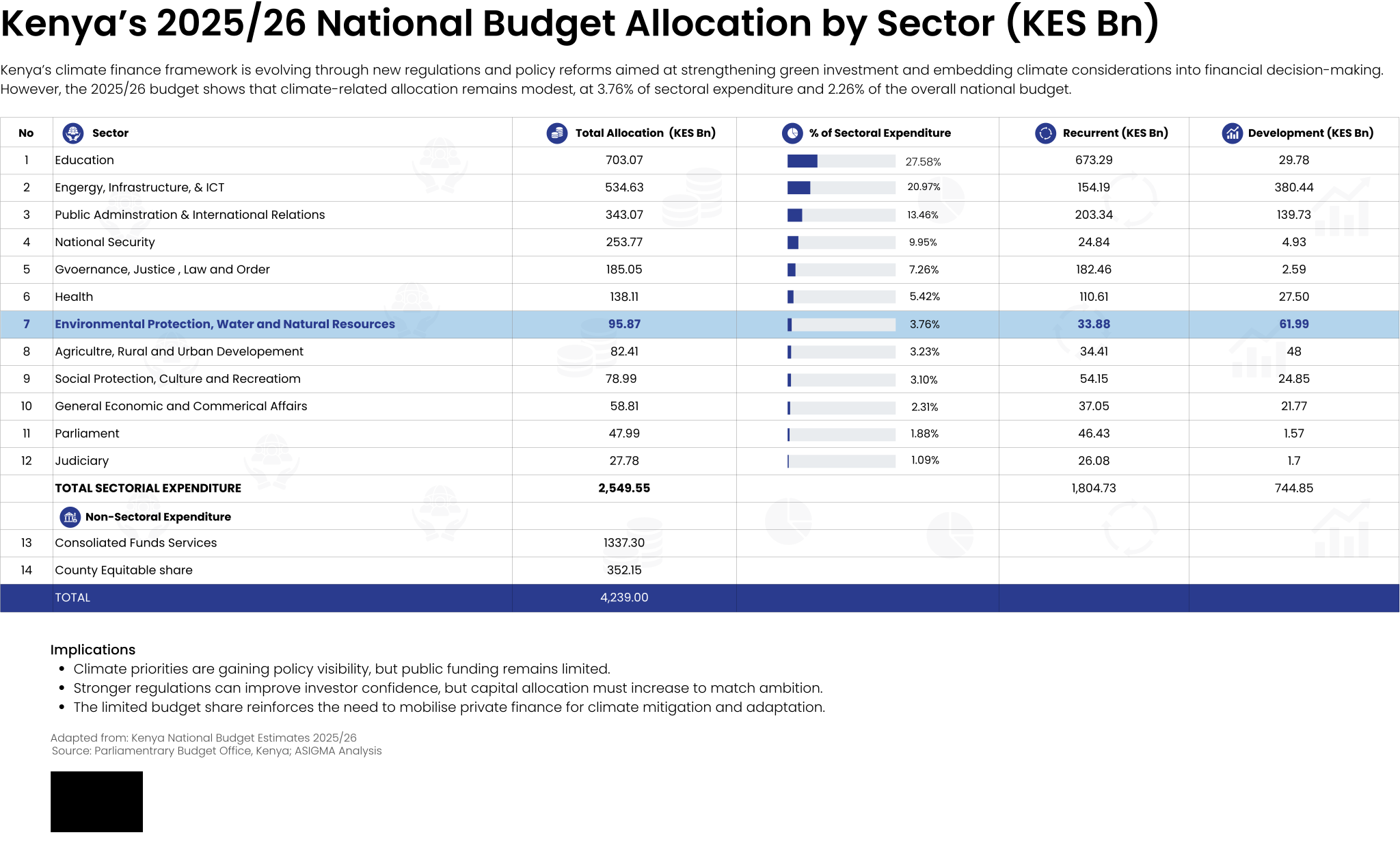
This prioritisation is reflected in Kenya’s 2025/2026 national budget, themed “Sustaining the Bottom-up Economic Transformation Agenda, Fiscal Consolidation and Investing in Climate Change Mitigation and Adaptation for Improved Livelihoods”.
Within the budget, allocations to climate investments, i.e. environment, water, and natural resources, account for approximately 3.76% of total sectoral expenditure, equivalent to about 2.26% of the overall national budget, highlighting fiscal recognition of climate priorities but also the still-limited scale of public climate-related spending.
Illustration 4
- Kenya Green Finance Taxonomy (KGFT). Launched by the Central Bank of Kenya in April 2025, the Kenya Green Finance Taxonomy provides a formal classification system for activities considered environmentally sustainable. It defines eligibility across climate mitigation, adaptation, and the “Do No Significant Harm” principle, in line with Kenya’s Nationally Determined Contributions under the Paris Agreement. By standardising what qualifies as green, the taxonomy reduces ambiguity and greenwashing risk for lenders and investors. Mandatory compliance after the 18-month transition embeds climate alignment into credit decisions and capital allocation.
- Climate Risk Disclosure Framework. Kenya’s Climate Risk Disclosure Framework requires banks to identify, assess, and disclose climate-related financial risks in accordance with IFRS S2 and Basel Committee guidance. Institutions must report exposures to physical risks, like floods and droughts, and transition risks linked to policy and market shifts. This regulation improves transparency and comparability across the financial sector, allowing investors to price climate risk accurately.
- Climate Change (Carbon Markets) Regulations, 2024. The Climate Change (Carbon Markets) Regulations, 2024 operationalise carbon trading under Kenyan law by establishing rules for the authorization, registration, and transfer of carbon credits. The regulations create a National Carbon Registry, intended to “ensure transparency, environmental integrity, and avoidance of double counting” in carbon transactions and reduces legal uncertainty for project developers and financiers.
- Climate Change Regulations, 2025. The Climate Change Regulations, 2025 further strengthen governance around carbon and climate-related activities, benefit-sharing, and enforcement. They introduce clear obligations for maintaining carbon records and impose stringent penalties for non-compliance, including unauthorized carbon credit sales and false disclosures. Together, these provisions enhance regulatory credibility, a key condition for investor confidence and bankability.
Why regulation does not automatically create bankable deals
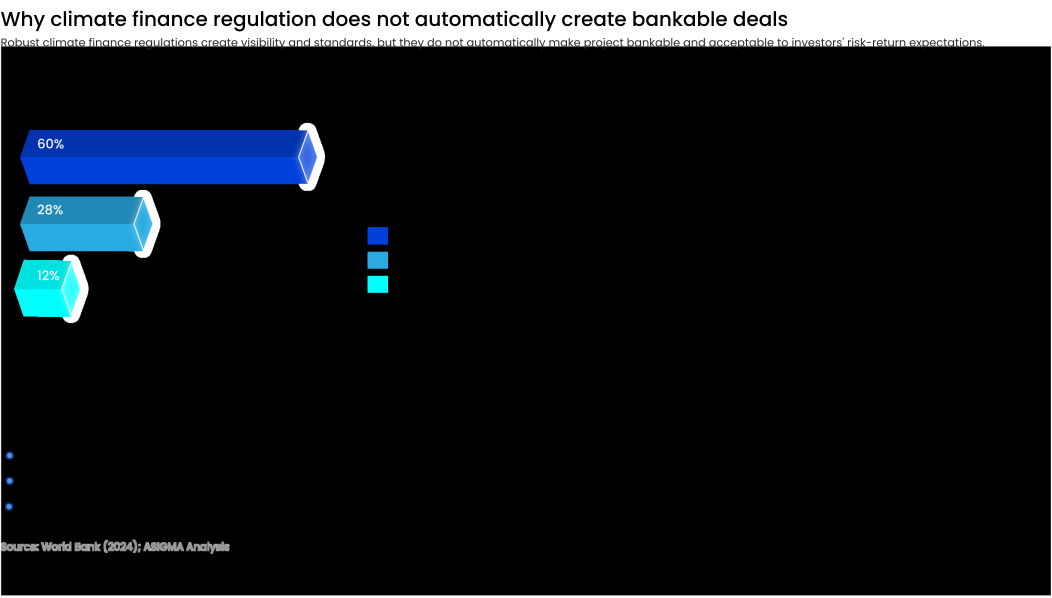
Robust climate finance regulations create visibility and standards, but they do not automatically make projects bankable and acceptable to investors’ risk–return expectations. According to a 2024 World Bank survey, 60% of Emerging Market Development Banks (EMDE) held a lending portfolio with 5% or less targeting climate financing, 28% providing no climate financing at all with the rest being unable to estimate (which highlights the noted data challenges). This highlights how limited bank participation remains, despite regulatory signals.
Illustration 5
Bankability depends on clear revenue streams and risk mitigation, not just policy intent. In Kenya, projects that have successfully attracted large-scale private capital typically combine long-term contracted cash flows, credible counterparties, and diversified risk-sharing structures.
A clear example is the Lake Turkana Wind Power project, developed by Lake Turkana Wind Power Limited and backed by a consortium of experienced equity investors, including Norfund and IFU of Denmark. The project reached financial close because it combined technical and financial feasibility with strong risk mitigation measures.
By contrast, many Kenyan climate initiatives remain at a conceptual stage, lacking detailed feasibility studies, robust cash flow forecasts, and investor-ready documentation, leading institutional investors to perceive them as higher risk relative to comparable opportunities in more mature markets.
Risk perception remains elevated in frontier markets: currency volatility, political uncertainty, and uneven enforcement of legal frameworks increase risk premiums demanded by private capital. Even with strong taxonomies and disclosure requirements, investors require concrete instruments such as guarantees or blended finance to participate meaningfully.
These challenges explain why, despite robust regulations, many Kenyan climate projects are not yet bankable. Comparable gaps are seen across East Africa, where Uganda and Tanzania have made progress with taxonomies and green finance frameworks but face similar pipeline and risk challenges.
Turning Regulations into Bankable Deals: Policy to Profitability
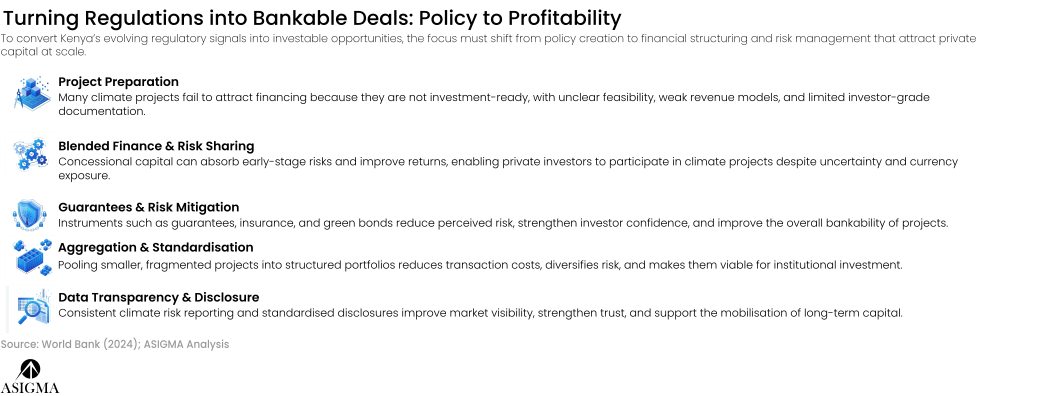
To convert Kenya’s evolving regulatory signals into bankable, investable opportunities, the focus must shift from only policy creation to financial structuring and risk engineering, which attract capital at scale by making the demand side attractive. The following interventions could be adopted:
- Project Preparation and Investment Readiness: Many climate projects fail to attract financing because they lack or are partially feasible with unclear revenue models and investor-ready documentation. A dedicated Project Preparation Facility anchored within the National Treasury, working with DFIs (Development Finance Institutions) and experienced facility managers, would help convert ideas into bankable project dossiers in priority sectors such as energy, water, and agriculture.
- Blended Finance and Risk Sharing: This is critical given Kenya’s exposure to currency risk, early-stage uncertainty, and limited risk appetite among local lenders. Development partners and DFIs, working alongside government, can use concessional capital to absorb first losses or improve returns for private investors. Linked to Kenya’s carbon market framework, blended finance can help improve project economics and crowd in commercial capital over a medium-term (3–5 year) horizon.
- Guarantees and Mitigation Instruments: Risk mitigation tools such as partial credit guarantees, risk insurance, green bonds and currency hedges are proven mechanisms to lower perceived risk and enhance deal bankability. In Kenya, this is illustrated by the Acorn Green Bond, issued to finance green-certified affordable student housing. The bond was dual listed on the London Stock Exchange and the Nairobi Securities Exchange and relied on independent certification to increase transparency, attract institutional investors, and improve pricing.
- Aggregation and standardisation can unlock capital for smaller climate projects that are currently too fragmented to attract institutional investors. In Kenya, the off-grid solar PAYGo sector shows how this works in practice, with developers pooling thousands of small household systems under standardised contracts and repayment structures. Aggregating these assets into portfolios reduces transaction costs and diversifies risk for lenders.
- Data Transparency and Disclosure: Consistent climate risk reporting aligned with international standards has been shown to double green bond issuance growth relative to peers, underscoring the importance of transparency in mobilizing long-term finance. Kenya’s Climate Risk Disclosure Framework is a strong start, but consistent application is critical.
Through these mechanisms, Kenya can convert regulation into investor-ready, bankable deals, following examples from India and South Africa.
Illustration 6
Regional and Global Comparisons: Where Kenya Stands
7.1. Regional Comparisons
Kenya’s regulatory progress places it ahead of many regional peers in formal frameworks. Uganda launched its National Green Taxonomy in 2025 to classify climate-aligned activities, and Tanzania’s Sustainable Finance Principles expands green investment access. However, both still face challenges in developing bankable pipelines comparable to Kenya’s emerging carbon market structures.
According to a 2024 publication on Climate Finance in East Africa by Danish Institute for International Studies, Kenya has been a more active participant in global climate finance, supported by a more established policy and regulatory framework.
Between 2015 and 2022, adaptation-related development finance to Kenya amounted to approximately US$3.53 billion, compared with US$2.62 billion for Tanzania and US$1.64 billion for Uganda, highlighting Kenya’s stronger track record in mobilising large-scale climate funding relative to its regional peers.
7.2. Global Comparisons
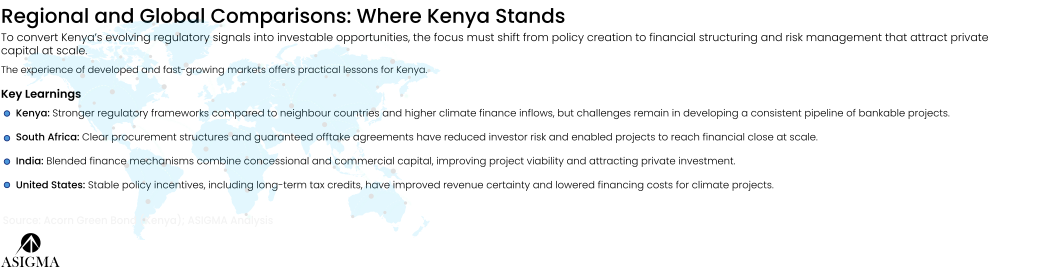
The experience of developed and fast-growing markets offers practical lessons for Kenya.
South Africa made climate projects bankable by setting clear rules before fundraising. The government created the Renewable Energy Independent Power Producer Procurement Programme (REIPPPP), which instructs companies on how to build and conceptualize renewable energy projects with a commitment to offtake their electricity for a predefined period at fixed prices. Because investors established market linkages, the project was ultimately de-risked. This programme helped renewable energy projects reach financial close and created an average of 55,217 jobs since 2011.
India has made climate projects bankable by using blended finance to reduce risk and attract private investors. According to the International Finance Corporation’s (IFC) Blended Finance for Climate Investments in India report, concessional capital has been combined with commercial finance through tools such as guarantees and subordinated debt to improve project viability.
This risk-sharing approach has helped climate projects reach financial close by making returns more predictable for investors. The report notes that each dollar of concessional finance can mobilise up to US$8 of private capital, allowing India to build a repeatable pipeline of investable climate projects. In contrast, Kenya still faces challenges moving climate projects from concept to bankable investment without similar large-scale risk-sharing mechanisms.
In the United States, rollbacks of climate policies weakened domestic and international climate finance flows and raised concerns about long-term policy consistency. In early 2025, the U.S. withdrew from the Paris Agreement, scaling back climate aid commitments, including a reported rescinding of approximately US$4 billion in pledges to the Green Climate Fund, and reversed several regulatory measures aimed at limiting emissions. This move adversely affected a U.N. initiative aiding over 100 countries to adapt to the rapidly changing world.
Prior to this, the U.S policy measures showed how stable frameworks can make climate projects bankable. The Inflation Reduction Act (2022) extended clean energy tax credits, giving developers long-term certainty over revenues. By allowing tax credits to be transferred, projects could raise financing more easily and reduce upfront capital constraints. According to the U.S. Department of Energy, this lowered financing costs and accelerated private investment in renewables and clean manufacturing.
These examples underline that while regulations are necessary, what differentiates bankable markets is execution infrastructure, risk mitigation instruments, and deep capital markets, areas where Kenya can build capacity and institutional mechanisms.
Illustration 7
Key Takeaways and Actions
Kenya has laid strong regulatory foundations for climate finance through the Green Finance Taxonomy, Climate Risk Disclosure Framework, and Carbon Markets Regulations. However, as global and regional experience shows, regulation alone does not create bankable deals. Bankability emerges when projects are well prepared, risks are clearly allocated, and revenues are predictable enough for private capital to participate.
To convert policy ambition into investable outcomes, Kenya must now focus on execution: building robust project pipelines, expanding blended finance and guarantee mechanisms, and strengthening institutions that support deal structuring and risk mitigation. Consistent application of disclosure standards and transparent reporting will further enhance investor confidence and comparability with more mature markets.
Experiences from South Africa, India, and the United States demonstrate that stable policy signals matter most when they are paired with practical tools that lower risk and enable projects to reach financial close. With sustained implementation and capacity-building, Kenya can move from signalling intent to delivering bankable climate investments that support resilience, growth, and long-term development.
If you are developing/financing climate projects in Kenya, here is what to prepare before approaching lenders/investors:
- A clear and credible revenue model. Show how the project generates predictable cash flows (e.g. offtake agreements, tariffs, user fees, or carbon revenues), supported by realistic assumptions.
- Strong project preparation and documentation. Provide completed feasibility studies, technical designs, environmental and social assessments, and a clear implementation timeline.
- A defined risk mitigation strategy. Demonstrate how key risks such as foreign exchange, offtaker credit, construction, and policy risk are managed through guarantees, insurance, hedging, or blended finance.
- Regulatory and policy alignment. Evidence compliance with Kenya’s Green Finance Taxonomy, climate regulations, and permitting requirements to reduce regulatory uncertainty.
- Transparent financial information and disclosures. Present robust financial models and reporting aligned with international standards to build investor confidence and facilitate due diligence.