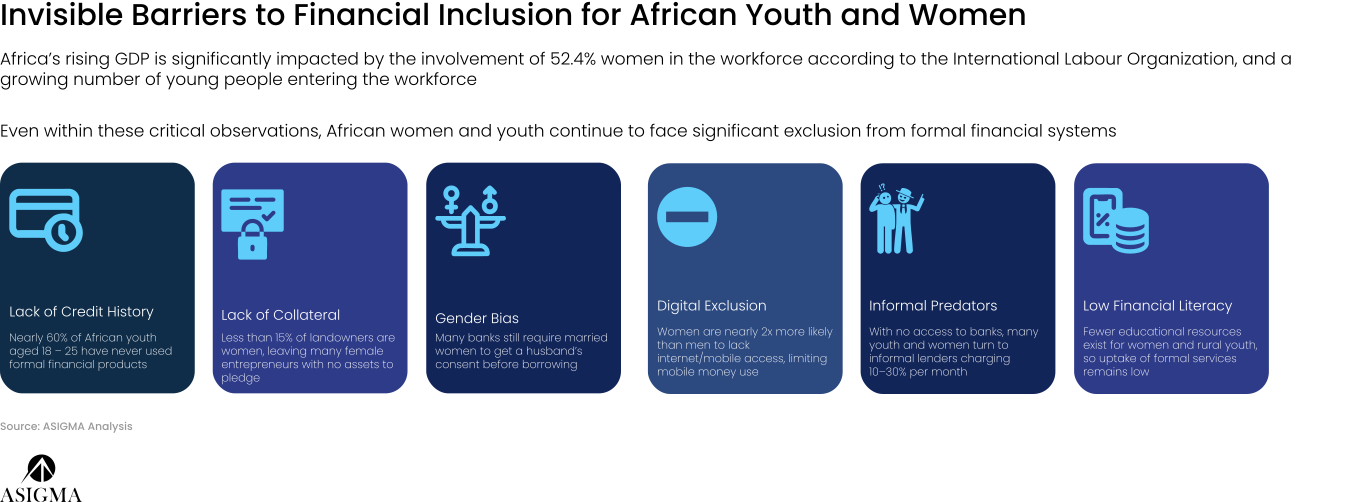
Africa’s GDP continues to rise with the involvement of 52.4% of women in the workforce according to the International Labour Organisation (2020) and a growing number of young people entering the workforce. With Africa’s population made up of 60% youth, this positions the continent as one of the youngest with vast economic potential. Moreover, Mastercard Foundation reports that a rising involvement of women in the formal workforce could impact the continent’s economy by approximately $287 billion by 2030, boosting GDP by 5 percent.
This evident interlink in the continent’s demographic profile and GDP contribution underscores the economic significance of youth and women and presents strategic opportunities for inclusive growth. Inspite of these critical observations, African women and youth continue to face significant exclusion from formal financial systems, limiting their ability to invest in businesses, education or personal growth. There has been tremendous progress in alternative lending, mobile money and fintech innovations, however, deep-rooted barriers such as lack of credit history, asset ownership, collateral, and digital access persist.
This article explores the multifaceted nature of access to finance challenges in Africa and presents the tested, transformative strategies that have begun to shift the landscape. It highlights success stories which align finance with borrower needs, use data-driven lending models, and promote inclusive financial practices. It also emphasises the role of supportive policies through Private-Partnership Program (PPP) interventions and Financial Literacy initiatives across the continent. In addition, it highlights blended finance models, regulation, and cross-sector partnerships in creating enabling ecosystems.
Together, these solutions demonstrate that financial inclusion is not just about access. It is about dignity, opportunity, and the power to participate fully in Africa’s economic future for women and youth.
Why Women and Youth Matter
Africa’s economic future rests heavily on its youthful and increasingly female-driven demographic. With approximately 60% of the population under the age of 25, the continent is uniquely positioned to benefit from a demographic dividend.
By 2050, Africa will be home to approximately 2.5 billion people. 830 million of the continent’s current demographic are young people aged 15–35, making up approximately 25% of the global youth population. Women also represent a significant share of this transformation, constituting approximately 50.5% of Africa’s population as of 2023.
Despite their numbers, women and youth remain disproportionately excluded from financial systems. This has limited their ability to launch or scale businesses, invest in education, or build long-term wealth. This large and growing segment represents enormous economic potential, as future entrepreneurs, workers, innovators, and consumers. However, their continued exclusion has far-reaching economic and social consequences.
Illustration 1
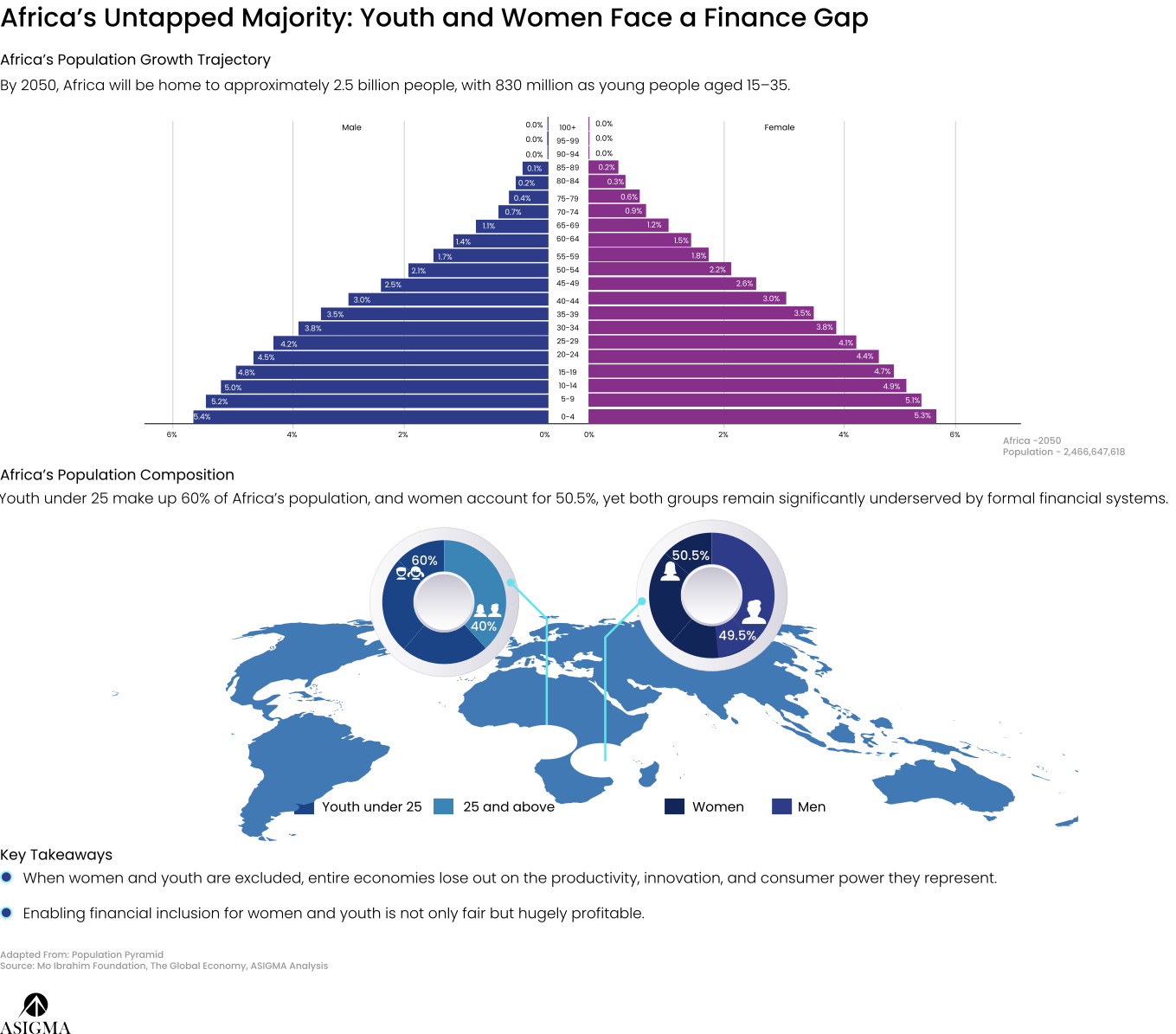
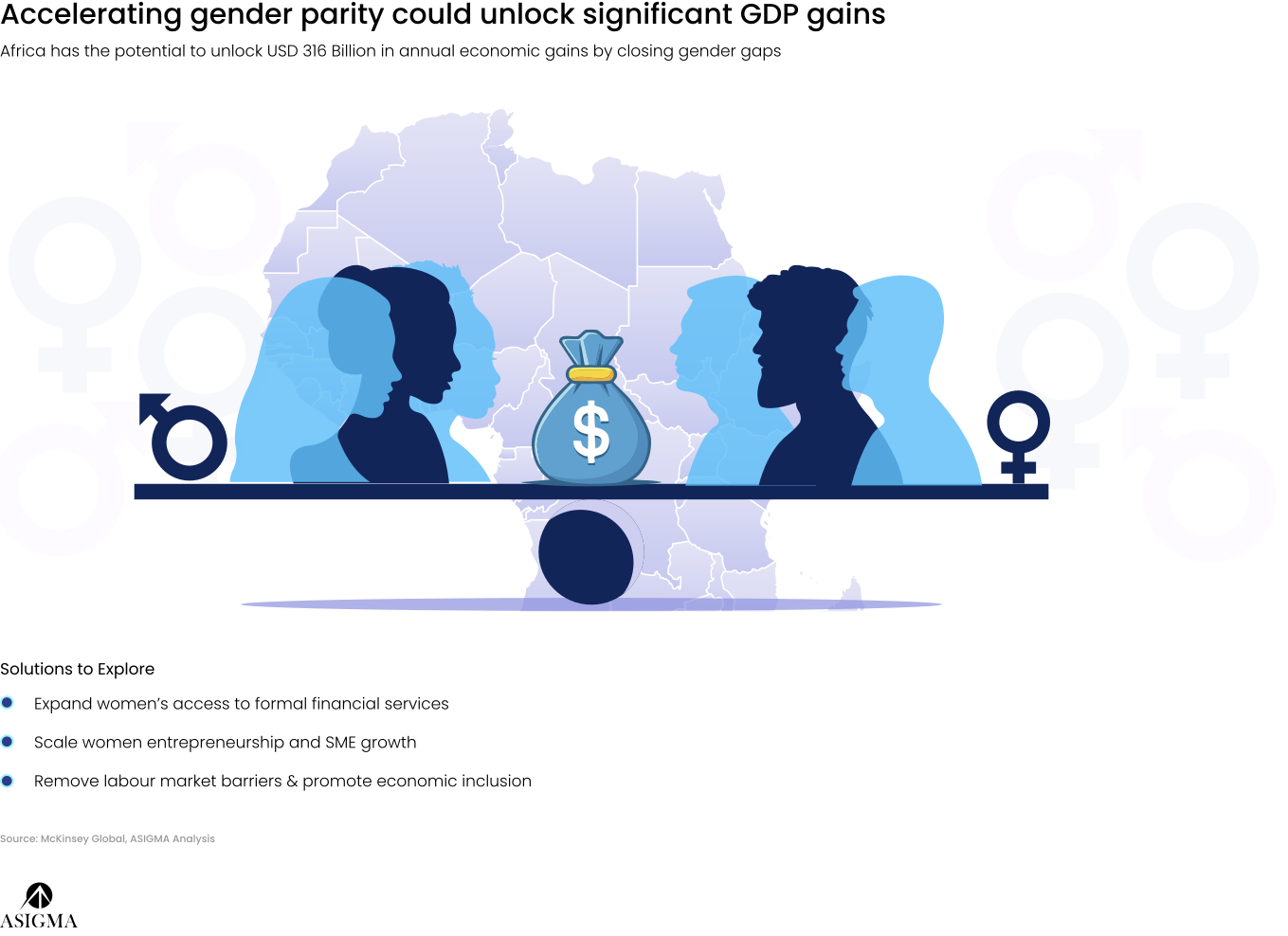
Access to finance is a catalytic enabler that allows individuals to invest in education, start businesses, manage risk, and improve household resilience. When women and youth are excluded, entire economies lose out on the productivity, innovation, and consumer power they represent. According to McKinsey insights on the region, closing the gender gap in financial inclusion could unlock roughly USD 316 billion in annual economic gains for Africa. The age and gender-based financial disparities, however, persist. If this demographic continues to be financially sidelined, Africa risks entrenching cycles of poverty and inequality, rather than unlocking the inclusive growth and sustainable development its demographic advantage promises.
Illustration 2
Africa’s Financial Exclusion Landscape
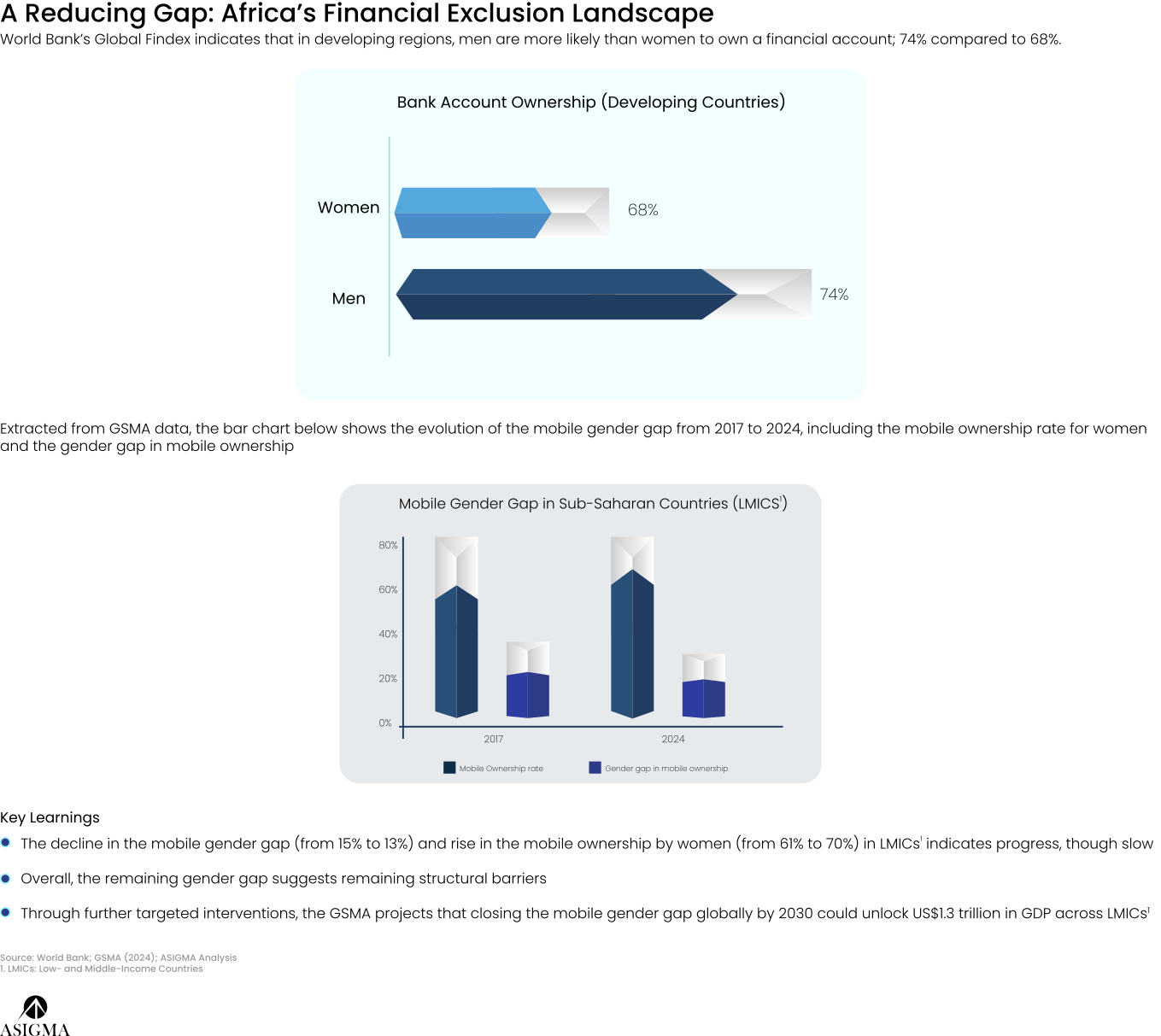
Although mobile money usage and access to financial services have grown significantly across Africa, women and young people continue to face notable barriers to inclusion in the formal financial system. Globally, in developing regions, men are more likely than women to own a financial account. The ownership rate stands at 74% for men compared to 68% for women, highlighting persistent gender disparities in financial access. In Kenya, nearly 45.6% of the financially excluded are rural youth aged 18–25, citing limited access to identification, smartphones, or stable incomes.
Digital exclusion compounds the problem as women are nearly twice as likely as men to lack access to mobile financial services largely due to device ownership and internet connectivity gaps. While some countries have made impressive progress, like Rwanda, many are lagging. Rwanda, for example has increased youth financial inclusion to 94% through a combination of digital ID systems and mobile money platforms. These examples remain the exceptions, not the norm.
Illustration 3
These disparities are not coincidental. They stem from deep rooted structural and systemic barriers that limit the ability of women and youth access, use, and benefit from financial services. These include longstanding issues around asset ownership, identification, credit history, digital access, and institutional design that still largely caters to formal, urban, and male clientele.
Access to finance remains a significant challenge for refugees, who often face systemic barriers that limit their ability to participate in formal financial systems. Many refugees lack the required documentation, such as national identification or proof of residency, which financial institutions typically require to open accounts or access credit. Even when documentation is available, language barriers, limited financial literacy, and unfamiliarity with local banking procedures can prevent refugees from navigating these systems effectively. Additionally, refugees are frequently perceived as high-risk clients due to unstable income sources, migration / re-location risks, or legal restrictions, which discourages lenders from offering tailored financial products. As a result, refugees often rely on informal mechanisms, such as community savings groups or informal loans, which provide limited security and scalability, ultimately constraining their ability to invest in businesses, education, or housing and perpetuating cycles of economic vulnerability.
Core Access to Finance Barriers Facing Women and Youth in Africa
Before proposing solutions to address the financial exclusion of Women and Youth in Africa, it is important to clearly identify the existing barriers. These barriers, deeply intertwined and often reinforcing each other, are critical in addressing access to finance challenges in Africa for these two demographics.
Lack of Formal Credit History
The most persistent and foundational access to finance barrier facing women and youth in Africa is the lack of formal credit history, a key criterion used by financial institutions to assess creditworthiness. Without a verifiable history of borrowing and repayment, these groups are often categorised as “high risk”. This either disqualifies them outright from loans or subjects them to prohibitively high interest rates and onerous terms as a safeguarding measure for the financial institutions. Many women in rural Sub-Saharan Africa have no form of documented credit history, and nearly 60% of youth aged 18 to 25 have never accessed formal financial products. This is not merely a result of inaction on their part but is deeply tied to systemic, cultural, and institutional structures that shape how credit is extended and recorded.
For women, the issue often begins with a lack of asset ownership, as many are excluded from inheriting land or registering property due to patriarchal customary laws. This absence of titled assets severely limits their eligibility for secured loans, forcing them to financially depend on male family members. As a result of societal norms, this financial dependency is further institutionalised through spousal consent requirements. In many rural areas, married women are routinely asked to provide consent from their husbands to access credit. This practice is rooted more in gendered social norms than in objective risk assessment. Financial institutions in some West African countries maintain internal policies mandating male spousal consent for married women borrowers.
For youth, the credit invisibility problem is worsened by their limited participation in formal employment and enterprise. The youth unemployment rates vary across Sub-Saharan Africa, averaging at 8.9% in 2023, while Southern Africa indicates higher rates. Thus, many young people lack payslips, utility bills, or other formal documentation that banks use to guarantee credit risk.
The lack of credit history therefore reflects systemic inequities shaped by legal, cultural, and economic structures.
Lack of Collateral
Closely linked to the absence of credit history is the widespread lack of acceptable collateral. Traditional lenders across Africa continue to demand land titles, fixed property, or formally registered business assets to secure loans. These requirements systematically disadvantage youth and women in their access to finance in Africa.
Women’s asset ownership is notably low. Despite contributing over 50% of agricultural labour in Sub-Saharan Africa, less than 15% of landholders are women. This means that even where women generate income, they often cannot leverage their productivity for credit due to the absence of titled collateral. Many inheritances and land rights remain registered under male relatives, which forces many women to depend on male guarantors or seek spousal approval, perpetuating financial dependence.
Youth face a parallel exclusion. Most young people, especially those aged 18–30, do not yet own land, homes, or formally registered enterprises. A significant portion of Africa’s youth is engaged in the informal sector, primarily through self-employment, due to limited access to formal job opportunities. Most youth-owned enterprises operate outside the formal economy, lacking verifiable assets or financial records, barriers that prevent them from accessing collateral-based financing.
Gender Bias and Preferential Lending
A critical but often under-discussed root cause of women’s financial exclusion is the preference of financial institutions to lend to men. This bias can be explicit or implicit, shaped by historical norms, risk perceptions, and institutional practices. Many lenders perceive men as more “creditworthy” due to assumptions about business size, asset ownership, or decision-making power. Consequently, women frequently face higher scrutiny, stricter collateral requirements, or outright denial, even when their businesses perform well.
This gendered lending behaviour not only restricts women’s access but also reinforces existing economic inequalities. Women-led enterprises in Africa receive less formal credit, despite being heavily engaged in small and medium-sized businesses. Additionally, lending staff often lack gender-sensitivity training, perpetuating unconscious biases in credit evaluations. The preference for lending to men also affects youth, as young women are doubly marginalised by age and gender.
Additionally, prevailing stereotypes by financial institutions paint youth as financially irresponsible or unstable borrowers, reinforcing their exclusion.
High Interest Rates from Informal Lenders
Lacking both collateral and formal credit history, women and youth frequently turn to informal lenders with minimal requirements. While these sources may offer quick access to credit, the interest rates are often exploitative, ranging from 10%–30% per month, far above market norms. In Kenya and Nigeria, some digital lenders have been reported to charge effective annualised rates (APR) exceeding 100%, with aggressive debt collection practices and reputational shaming on social media.
These informal options may serve immediate needs but are neither viable nor sustainable for long-term financial health. They create cycles of debt and instability, eroding trust and deterring formal engagement in the financial system
Low levels of financial literacy
Compounding the issues of credit invisibility and lack of collateral are the lower levels of financial literacy among women and youth. This further entrenches their exclusion from formal financial access. Financial literacy is more than just understanding interest rates; it involves the ability to budget, plan, compare products, and manage risk. This gap stems from structural inequalities in education access, digital exposure, and targeted outreach. For instance, young people in rural areas often receive limited financial education, and many women, especially those in informal or subsistence livelihoods, lack exposure to formal banking systems altogether. Women rely on informal financial knowledge from family or social groups, rather than receiving information directly from financial institutions.
The result is a cycle of underutilisation. Even with financial services being physically or digitally accessible, many youths and women do not use them effectively, or at all. This can be largely attributed to lack of trust, understanding, or confidence. This has been particularly evident in the slow uptake of credit and savings products among low-income female populations.
Recognising the multifaceted nature of these obstacles, targeted strategies are needed to promote inclusive financial participation. Addressing the lack of formal credit history can be a key to unlocking financial inclusion for women and youth. Even a small, verifiable credit record provides a financial identity that reduces reliance on traditional collateral like land or assets, which many lack. This shift allows lenders to assess borrowers based on behaviour and potential rather than inherited wealth or formal employment. Building credit history also boosts borrowers’ confidence and familiarity with financial systems, opening doors to financial literacy and larger loans. In essence, credit history acts as a vital bridge, connecting excluded groups to formal finance and enabling their economic advancement.
Illustration 4
Transformative Strategies to unlock Africa’s Financial Inclusion: What Works and How to Implement Them
Unlocking financial inclusion for Africa’s youth and women demands practical, tested and innovative strategies tailored to their specific challenges. The strategies delve into what works and how these solutions are being put into action.
Purpose-Driven Lending by Financial Institutions
Financial institutions that align loan offerings with the specific purposes of borrowers have demonstrated significant success in supporting youth and women entrepreneurs. By tailoring loan products to meet the unique needs of borrowers, whether for working capital, asset acquisition, or business expansion, lenders can design terms that are both appropriate and supportive. This approach not only enhances repayment rates but also fosters greater financial inclusion.
A notable and compelling example of this strategy in action is Uganda’s Micro and Small Enterprise (MSE) Recovery Fund. In partnership with the Mastercard Foundation, with ASIGMA as the Facility Manager, the Financial Sector Deepening Uganda (FSDU) launched this 5-year USD 20 Million fund in 2022. The aim of this Recovery Fund is to facilitate access to finance directly to 50,000 micro and small enterprises, that is, at least 40% women and 30% youth. This is with an objective to shorten the recovery trajectory of youth and women-owned and operated businesses from the COVID-19 pandemic effects by providing their businesses with much-needed capital injections.
As of March 2025, 22 out of 25 participating financial institutions have been onboarded to disburse loans aligned with this Fund. Impressively, the Fund has cumulatively disbursed approximately USD 88.9 million from its allocated budget. The Fund’s impact on targeted demographics has been remarkable as youth-owned businesses have accounted for 45% of loans disbursed, surpassing the original target of 30%. Meanwhile, loans to women-owned businesses have reached 70%, fully meeting the Fund’s ambitious target.
Financial institutions participating on the Fund have demonstrated a strong cognisance of borrower needs and have adopted purpose-driven lending practices that address the unique challenges faced by women and youth entrepreneurs. This focused strategy has unlocked new opportunities, enabling these traditionally underserved groups to access credit on favourable terms, supporting their business resilience and growth.
By aligning credit products with borrowers’ intentions and risk profiles, purpose-driven lending bridges the gap between financial institutions and marginalised entrepreneurs. It is a practical pathway toward inclusive economic growth and a vital tool for transforming Africa’s youth and women-led enterprises.
Group-Based and Guarantee Lending Models
Group lending models have proven effective in overcoming traditional collateral requirements by enabling women and youth to guarantee each other’s loans collectively. For instance, Village Savings and Loan Associations (VSLAs) in Uganda and Tanzania operate on this principle, allowing members to access credit through social guarantees rather than physical assets. In Uganda, many Savings and Credit Cooperative Organisations (SACCOs) have adopted the VSLA methodology, offering group loans with co-guarantees.
Beyond grassroots models, innovative financing mechanisms such as credit guarantees are helping to scale access for women-led enterprises. These guarantees are provided by third-party institutions such as development finance or government programs, which agree to cover a portion of the loan (usually between 50% to 80%) in the event of default. This reduces the lender’s exposure to risk, making it more feasible for banks and financial institutions to extend credit to borrowers who may lack conventional collateral or credit history.
A prime example is the Women Entrepreneurs Finance Initiative (We-Fi), which leverages risk-sharing facilities and guarantees for financial institutions to encourage and de-risk lending to women-led small and medium enterprises across Africa. Similarly, success stories have emerged from the MSE Recovery Fund, which some financial institutions use group guarantees to unlock financing for youth and women-owned businesses recovering from the impacts of COVID-19. By sharing risk, this model encourages financial institutions to offer more favourable loan terms and expands access to finance for women and youth who would otherwise remain excluded.
Data Driven Credit Scoring and Risk Based Lending
Traditional credit scoring systems often exclude first-time borrowers, especially youth and women, because they lack a formal credit history. This absence makes it difficult for financial institutions to accurately assess their creditworthiness. To bridge this gap, fintech companies like Tala in Kenya leverage alternative data sourced from smartphones, including patterns of device usage, loan application behaviour, financial transactions, and other data points. These innovative approaches help create a financial footprint for previously “invisible” borrowers, enabling them to build credit histories and access loans.
While this is helpful, data alone is not enough to ensure truly inclusive finance. Organisations such as Women’s World Banking highlight the critical need for collecting and applying gender-disaggregated data to capture the unique financial behaviours and challenges women face. Through partnerships with financial institutions, they help design tailored products that address women’s specific needs, such as flexible repayment schedules and lower collateral requirements. In addition, they advocate for policies that foster greater financial inclusion for women.
By combining alternative data with gender-sensitive approaches, building formal credit histories becomes a powerful tool to unlock sustainable access to finance for youth and women, empowering them to participate more fully in the economy.
Public-Private Partnership Programs
Strategic collaboration between governments, private sector actors, and development partners has emerged as a key enabler of inclusive finance. Public-Private Partnerships (PPPs) can leverage the strengths of each sector i.e., policy and infrastructure support from government, innovation and capital from the private sector, and capacity-building from development partners to reach underserved populations.
One notable case is the 2X Challenge initiative, a global PPP launched by G7 development finance institutions, including the UK’s British International Investment (formerly CDC), the French DFI Proparco, and the U.S. International Development Finance Corporation. It mobilises private sector investments to support women-owned and women-led businesses across emerging markets, including Ethiopia, Kenya, Rwanda, Tanzania & Uganda. As of 2023, the 2X Challenge had committed over USD 16 billion globally, with a significant portion channelled to Sub-Saharan Africa through the Invest2Impact initiative to promote gender-lens investing.
Similarly, the Young Africa Works Kenya partnership between the Mastercard Foundation, Government of Kenya and the private sector, aims to equip youth and women with entrepreneurship skills, access to finance, and job opportunities. Through this partnership, Equity Bank has between 2020 and 2024 provided low-interest loans, financial literacy training, and mentorship to over 1.2 million young entrepreneurs, majority of whom are women.
These PPPs show how collective action can scale solutions, de-risk financial products, and embed inclusive policies into national financial ecosystems. For stakeholders aiming to close financial inclusion gaps in Africa, replicating such partnerships offers a powerful blueprint.
Gender-Responsive Financial Products
Gender differences in borrowing behaviour significantly influence how men and women engage with financial services. Women typically borrow smaller amounts, demonstrate more consistent repayment patterns, and tend to diversify their income streams across multiple activities. In contrast, men are more likely to take larger loans, often focused on a single venture or asset acquisition, which can carry higher risk. Recognising these distinct behaviours is crucial for lenders to design tailored financial products rather than applying a one-size-fits-all approach.
In Nigeria, Zenith Bank’s Z-Woman loan product offers female business owners single-digit interest rates, digital skills training, and longer repayment periods, benefiting over 5 million women since its launch in 2022. In Uganda, Stanbic Bank’s Smart Start initiative “Kiri SupaDupa”, targets young entrepreneurs with flexible financing options of up to UGX 360 million, specialised interest rates for young women, and repayment periods of up to 96 months, thereby lowering barriers for youth. These examples highlight how gender-responsive and youth-focused financial products can effectively address diverse borrower needs and promote inclusive growth.
Financial Literacy
For youth, through financial education initiatives led by organisations like Aflatoun International, are being equipped with critical money management skills like budgeting, saving, and investing. These programs are implemented across Anglophone African countries using interactive learning approaches. In Namibia, the Ministry of Finance officially launched its Financial Literacy Initiative in 2012, and this has since then grown to target youth and women, offering training for individuals and MSMEs in Financial Management among other initiatives. Furthermore, the Central Bank of Nigeria (CBN) is in a bid to enhance financial literacy as part of its Financial System Strategy of 2020, in partnership with the World Bank and Local NGOs.
Through this framework, CBN has rolled out mass awareness campaigns through school outreach programs during events like Global Money Week and World Savings Day and is collaborating with the education ministry to integrate financial literacy into school curricula. In 2023, Nigeria expanded these efforts by launching SabiMONI, a national e-learning financial literacy platform to certify trainers and scale access to financial education. Financial inclusion in Nigeria rose from 65% to 67% in 2023, reducing the share of financially excluded individuals from 36% to 32%.
In response to low financial capability among women and youth borrowers, some financial institutions in Africa are pairing lending with targeted financial literacy programs to ensure responsible credit use and long-term financial resilience. Programs like the African Guarantee Fund for Women (AGF-W) exemplify this tailored approach by providing loan guarantees and technical assistance specifically to women-led SMEs, helping to mitigate risk and improve access to capital.
These programs foster strategic long-term financial behaviour change, positioning women and youth to better access and manage formal financial services.
Digitally Enabled Financial Products
Digital finance stands out as a transformative tool and equaliser for expanding financial inclusion in Africa. Kenya’s M-Pesa platform has over 32 million users, with women making up more than half of them. Research by the Massachusetts Institute of Technology (MIT)in their 2016 study on Mobile Money Services in Kenya highlights that M-Pesa contributed to lifting approximately 2% of Kenyan households out of poverty, with women-led households benefiting the most.
Similarly innovative mobile credit applications, such as Tala in Kenya, leverage alternative data points to provide financial access to those often excluded from traditional credit scoring, especially youth and women. These digital products demonstrate how technology can bypass traditional barriers and create new pathways to finance.
The Role of Policy and Ecosystem Enablers
The role of policy and ecosystem enablers is pivotal in shaping an inclusive financial landscape that reaches youth and women, two of Africa’s most underbanked yet economically vital demographics. These enablers set the foundation for innovation, reduce market failures, and help crowd in private investment to underserved markets.
Unlocking financial inclusion for youth and women requires more than just innovative products, it demands a supportive ecosystem shaped by forward-looking policy, strategic regulation, and robust cross-sector collaboration. National governments are increasingly stepping up, using public policy to close infrastructure and capability gaps that disproportionately affect underserved groups. For instance, Kenya’s Universal Service Fund (USF), managed by its Communications Authority, has helped expand digital connectivity to some of the country’s most remote areas. As of 2024, the Fund had connected nearly 800,000 people, delivered broadband to 886 secondary schools, and transformed 56 public libraries into digital hubs. These efforts are foundational, and without them, connectivity, mobile money, digital IDs, and e-KYC systems cannot function.
Complementing infrastructure investments are policies that target digital and financial capability. In Nigeria, the Central Bank’s National Financial Literacy Framework lays out a national roadmap to strengthen financial education across all age groups and segment, including youth and MSMEs. The strategy leverages NGO partnerships, public institutions, and fintech platforms to deliver practical, inclusive financial training.
Yet, even with supportive infrastructure and skills, many youths and women remain locked out of formal credit markets due to risk perceptions and a lack of collateral. Here is where blended finance plays a catalytic role. By using concessional capital, risk-sharing, and guarantees to de-risk lending, governments and development partners can encourage commercial institutions to lend to underserved segments.
Equally important is the role of regulation in embedding equity and accountability into financial systems. Policymakers can mandate the collection of gender- and age-disaggregated data, helping identify structural exclusion patterns and forcing institutions to rethink who they serve and how. Progressive regulators have also embraced tiered KYC requirements, enabling low-income individuals to open and use accounts with minimal documentation, a game-changer for youth and rural women without documentation or fixed addresses. Additionally, Uganda’s Refugee Act (2006) guarantees refugees the same economic rights as other foreign nationals, including freedom to engage in commerce and access employment, rights which underpin their ability to open bank accounts or use mobile money services. United Nations High Commissioner for Refugees (UNHCR) explicitly clarifies that this entitlement extends to accessing financial services using refugee-issued ID documents.
Finally, cross-sector partnerships are indispensable. Africa’s financial inclusion efforts, like the Agricultural Credit Facility (ACF), Affirmative Finance Action for Women in Africa (AFAWA), the Young Africa Works Kenya program, etc succeed not in isolation but through coordinated efforts that combine capital, training, mentorship, and policy reform. These ecosystems of trust and innovation prove that when regulation, financing, and delivery align, finance can become not just accessible, but transformative.
Conclusion
Advancing financial inclusion for youth and women in Africa demands coordinated action from governments, the private sector, and development partners. Unlocking financial inclusion for Africa’s women and youth is not only a social imperative but also an economic one. The barriers they face are well known, and these include limited credit histories, lack of collateral, institutional bias, and digital exclusion. Fortunately, we now have some proven strategies that work, ranging from purpose-driven lending and group guarantees to fintech innovations and public-private partnerships.
However, scaling these interventions requires more than isolated pilots. To lessen the divide, it demands deliberate alignment of policies, capital, and incentives by all parties. Development partners play a critical role in catalyzing change by de-risking markets, supporting capacity building, and investing in gender- and youth-sensitive solutions. But long-term success also hinges on local ownership by governments, financial institutions, and communities themselves.
Africa’s demographic dividend will only be realized if women and youth are given equal footing in the financial arena. The path forward lies not just in expanding services, but in rethinking systems to reflect the realities, aspirations, and potential of those they are meant to serve. Ultimately, enabling access to finance for youth and women unlocks entrepreneurship, strengthens household resilience, and drives inclusive growth. With technology, targeted product design, literacy, regulation, and strong partnerships, Africa has a unique opportunity in the next decade to build a financial ecosystem where youth and women don’t just participate, they lead.