Most executives and C-Suite leaders do not lose sleep because software is “badly written.” They lose sleep because software becomes a business risk: delayed launches, low adoption, data exposure, regulatory exposure, and teams stuck in expensive rework.
For leading institutions, software delivery is increasingly tied to how work gets done, how projects are delivered, and how quickly organisations can respond to changing business needs. What may appear to be a technical delay can quickly become a revenue concern, an adoption challenge, an operational bottleneck, or a governance risk.
That is why modern software development is no longer a technical concern left only to developers and engineers. It is a leadership and execution issue, directly connected to business performance, operational efficiency, project delivery, and long-term competitiveness.
Illustration 1
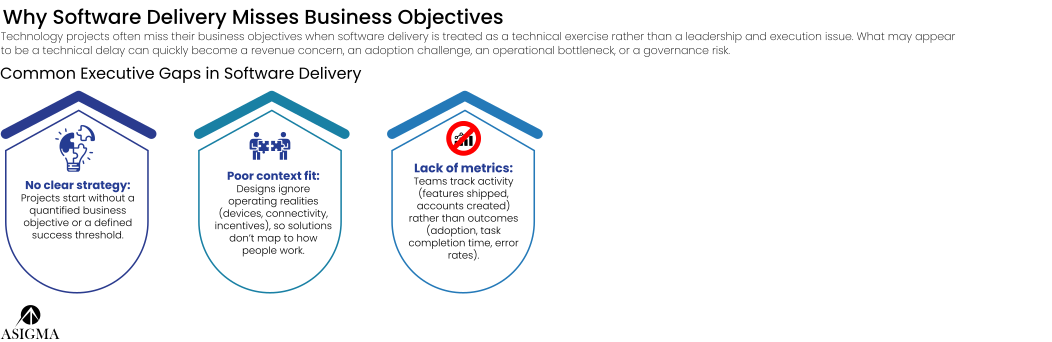
At ASIGMA, our experience across technology-driven advisory and implementation work has shown that successful digital products depend on more than the quality of the code. They depend on whether the solution is grounded in context, governed with discipline, tested against real operational conditions, and continuously measured after launch.
This article explores three factors business leaders must understand about software delivery and five leadership priorities that can help organisations turn technology investments into measurable business value.
Factors Business Leaders Must Understand About Software Delivery
1. Start with Context, Not Features
Technology is meant to solve a business problem. However, software teams often begin with features before fully understanding the environment the product is expected to operate in. This creates a common delivery risk: a system may be technically functional, but poorly aligned with the people, processes, and conditions that determine whether it will actually be used.
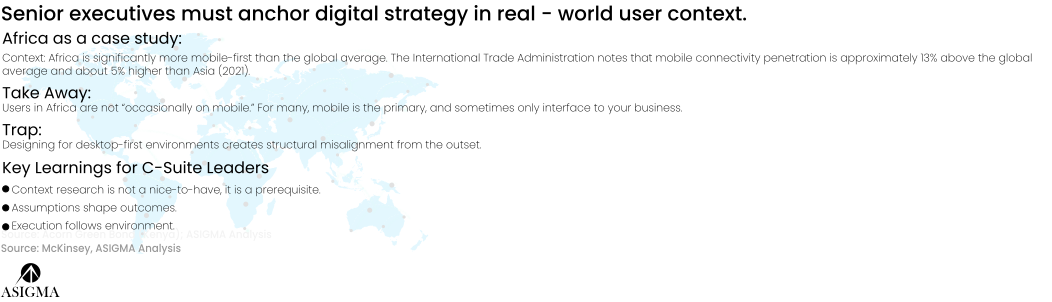
Context matters because every organisation operates within a specific ecosystem, as shown in Illustration 2 below. There are approval processes, reporting lines, user behaviours, infrastructure limitations, compliance requirements, and internal incentives that influence how a digital solution performs in practice. If these realities are not understood early, the organisation may build a product that looks complete but does not improve the way work is done.
This is particularly important in African markets, where mobile access continues to shape how people interact with financial, commercial, and public services. For many users, mobile is not a secondary channel. It is often the primary interface through which services are accessed. According to the International Trade Administration, Africa is more mobile than the world average by a wide margin, with mobile usage about 13 percentage points above the global average and around 5 points higher than Asia, as of 2021. That reality has direct implications for how organisations design, roll out, train, and support digital systems.
A system intended for such markets must be able to work within practical usage conditions. It should account for smaller screens, interruptions, varying device quality, inconsistent connectivity, and different levels of digital familiarity. These are not minor design considerations. They determine whether a product becomes part of daily operations or remains underused after launch.
For senior executives, the leadership question is not simply, “What features are we building?” It is, “What business process improves because this exists?” The answer should be clear before large investments are made.
Illustration 2
2. Speed Alone Does Not Guarantee Value
Agile delivery is often interpreted as moving quickly. In reality, its value is less about speed and more about reducing the cost of being wrong.
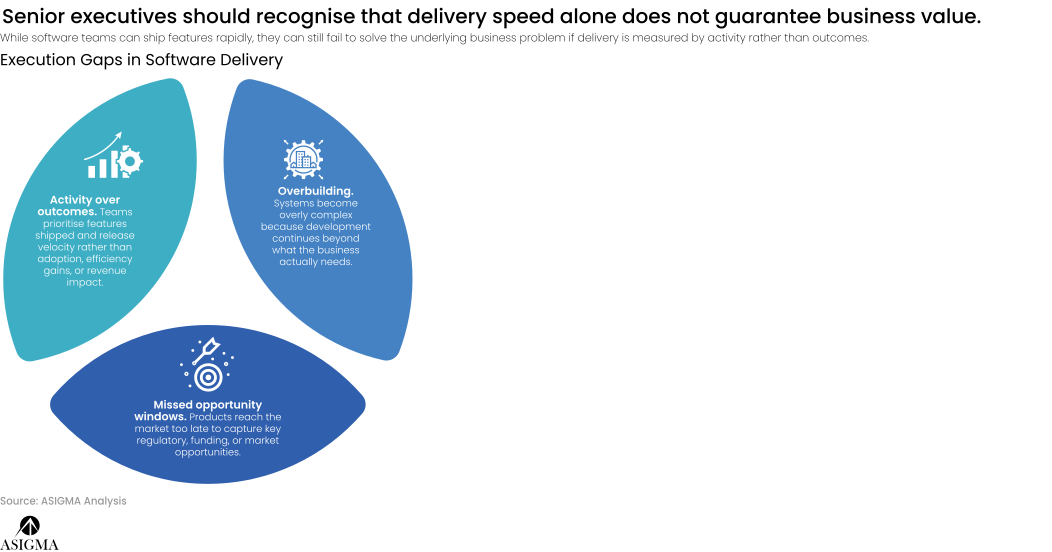
Many software projects struggle because delivery is measured by activity rather than outcomes. Teams can ship features, close tickets, and meet development milestones while still failing to solve the underlying business problem. When this happens, the organisation may appear to be making progress, while the actual value remains unclear.
Illustration 3
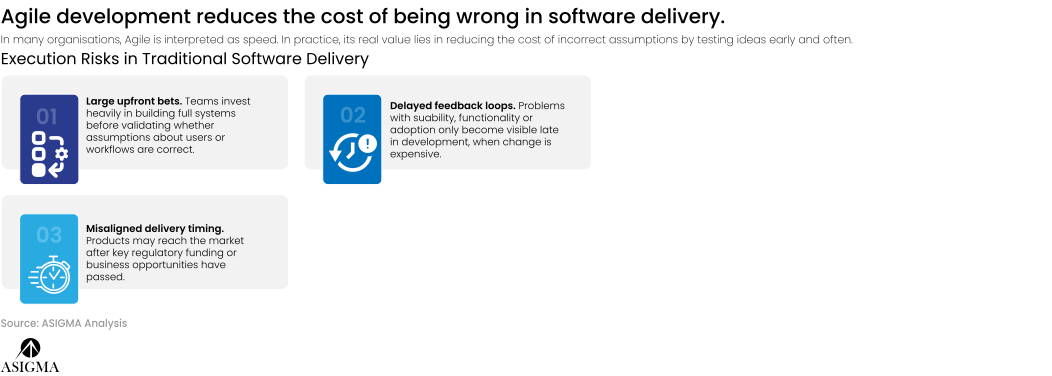
This is where software delivery becomes a project delivery issue. If teams continue building without regular validation, organisations risk overcomplicating systems, missing market windows, or discovering too late that the product does not fit user needs. The cost is not only technical rework. It is lost time, delayed adoption, and missed opportunities to improve revenue, efficiency, or service delivery.
Modern delivery should therefore be treated as an evidence building process. Early releases help organisations test assumptions while changes are still manageable. They reveal where users struggle, where workflows break down, and where the business case needs to be refined. This allows scope to grow with confidence rather than enthusiasm alone.
For executives, the priority should not be to push teams to “move faster” without direction. The stronger leadership move is to insist on evidence-based progression. Each stage of delivery should answer a practical business question: Is the solution solving the right problem? Are users adopting it? Is it reducing friction? Is it improving the intended outcome?
When delivery is anchored in evidence, technology becomes less of a gamble and more of a managed execution process.
Illustration 4
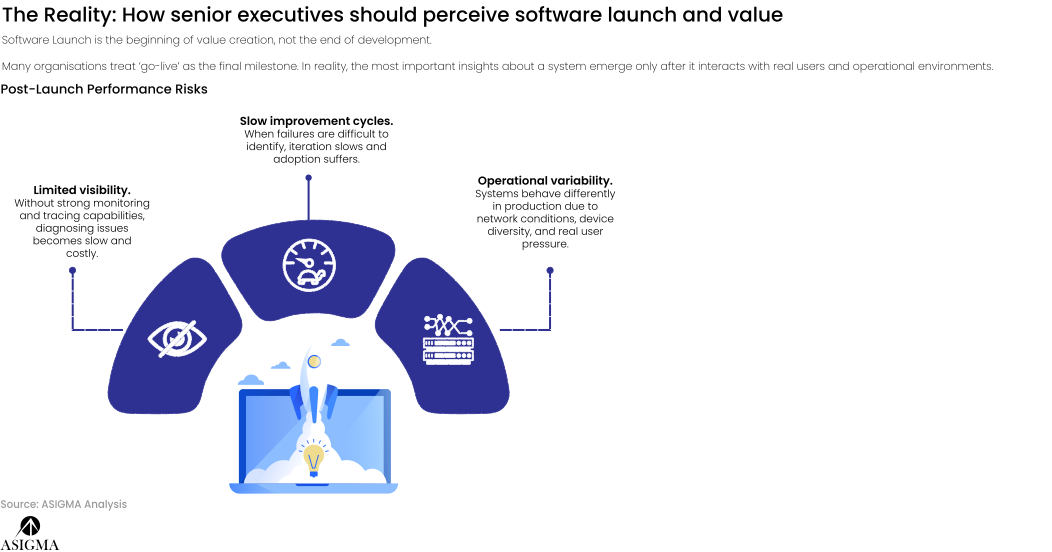
3. Going Live Is Where ROI Begins
One of the most expensive assumptions in software development is that launch marks the end of the project. In reality, launch is where the real test begins.
Before launch, a product is tested in controlled environments. After launch, it meets the full complexity of daily operations. Users behave differently under pressure. Network quality varies. Devices respond differently. Transaction volumes increase. Workarounds emerge. These realities often reveal issues that were not visible during testing.
This is why post launch visibility is critical. A system cannot be improved if teams cannot see where it is failing, how users are interacting with it, or which steps are slowing down performance. Without that visibility, organisations may continue investing in a system without understanding whether it is delivering the intended value.
One of the important lessons from ASIGMA’s own technology delivery experience has been the value of improving observability. Through our Symos platform, stronger visibility into transaction flows made it easier to trace where failures occurred, identify specific points of delay, and validate fixes more efficiently. This reduced time spent diagnosing issues and allowed teams to iterate faster.
“At ASIGMA, we approach technology with the understanding that it must solve real business problems, not simply introduce new systems. A digital system only creates value when it improves how teams work, supports better decisions, and fits the environment it will operate in. For leaders, the real question is whether the investment is strengthening delivery, reducing risk, and making operations more efficient.”
– Wilson Kiggundu – Chief Technology Officer, ASIGMA
For business leaders, this matters because operational visibility directly affects performance. It influences incident response, customer experience, internal efficiency, and confidence in the system. A product that cannot be monitored properly creates hidden risk, even when it appears to be functioning on the surface.
Post launch measurement should therefore be treated as part of the investment, not as an afterthought. Leaders should know whether users are actively engaging with the product, whether key workflows are being completed, where errors are occurring, and how quickly teams can respond when issues arise.
If nobody owns outcomes after launch, the product may remain technically available while quietly failing to deliver value.
Illustration 5
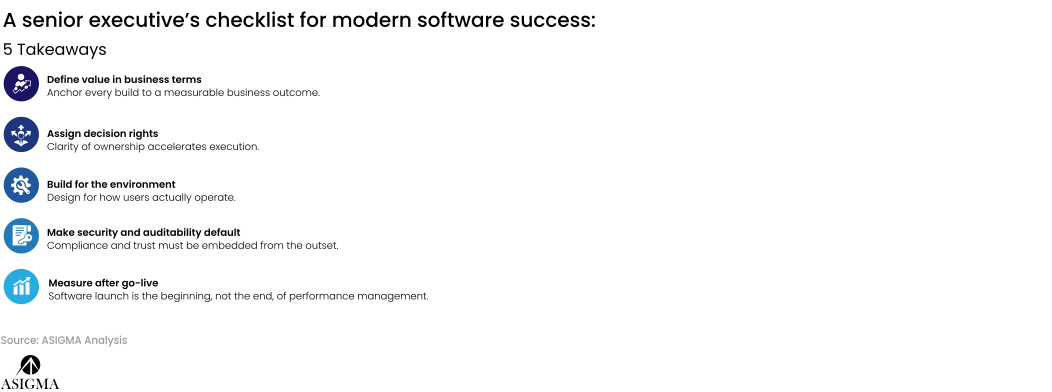
What Senior Executives Should Prioritise To Achieve Sustainable Succes
For modern software delivery to succeed, leadership involvement must go beyond approving budgets or attending launch meetings. Executives play an important role in creating the conditions that allow technology projects to deliver measurable value.
Senior leaders should prioritise the following:
1. Define value in business terms
Every digital investment should be connected to a clear outcome, whether that is reducing turnaround time, improving service delivery, increasing adoption, strengthening compliance, or supporting revenue growth. Without this clarity, teams may focus on building functionality rather than solving the business problem.
2. Establish clear decision structures
Software delivery often involves trade-offs between speed, cost, quality, security, and user needs. When ownership is unclear, teams lose time waiting for direction or revisiting decisions. Strong governance helps projects move with discipline and keeps delivery aligned to organisational priorities.
3. Build for the environment
A good product is not necessarily the one with the most features. In many contexts, the better product is the one that is simple, reliable, accessible, and easy to adopt. This is especially important where users operate under infrastructure, time, or capacity constraints.
4. Treat security, auditability, and visibility as core requirements
In regulated or transaction-heavy environments, security, logging, and audit capabilities should not be added late in the process. They are part of what makes a system reliable, defensible, and fit for scale.
5. Measure outcomes beyond deployment
A successful launch is important, but it is not the same as business success. Real value is seen in adoption, usage, efficiency gains, reduced errors, faster decision-making, and improved service outcomes.
Illustration 6
Final Word
Modern software development is not just an engineering process. It is a business execution capability.
For senior executives, the question is no longer whether technology is being built, but whether it is being built in a way that improves outcomes, reduces risk, and strengthens the organisation’s ability to deliver.
Digital products create value when they are grounded in context, guided by clear governance, tested through disciplined delivery, and measured after launch. When these elements are missing, software can become an expensive asset that looks impressive but delivers limited impact.
The organisations that get this right are not simply building systems. They are building the operational capability to adapt, scale, and compete in increasingly digital markets.