Capital markets are playing an increasingly central role in Sub-Saharan Africa’s economic growth by channelling long-term capital into infrastructure, business expansion, and wealth creation. As countries in the region build out their capital market systems, these platforms are emerging as key drivers of development.
This article explores how capital markets are fuelling growth across the region, beginning with an overview of each country’s market landscape, followed by an analysis of the demand side, where institutions seek funding, and the supply side, where investors expect returns. It also highlights key events that reflect improving capital market performance and challenges that limit broader participation, especially for SMEs.
Overview of Capital Markets Sub-Saharan Africa
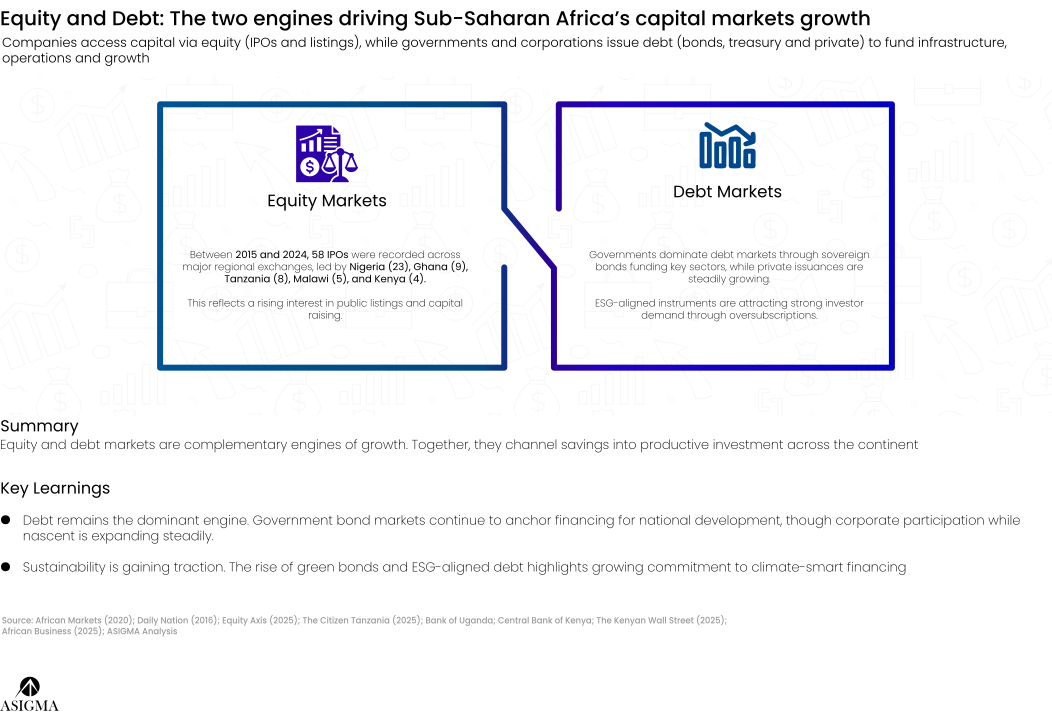
Capital markets drive growth primarily through two key channels:
- Equity markets, where companies raise capital by selling shares to the public.
- Debt markets, where both public and private entities issue bonds to borrow funds for longer-term projects.
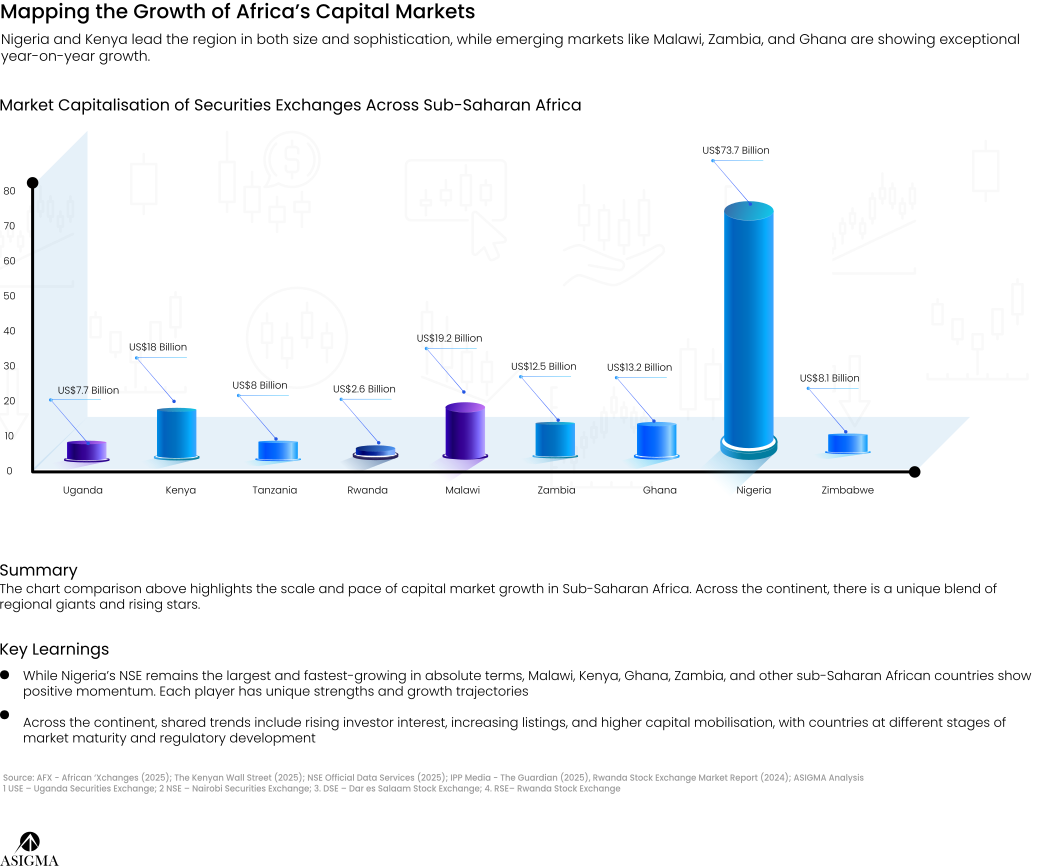
While each country in Sub-Saharan Africa is developing its capital markets at a different pace (see Illustration 1 below), the shared trend is unmistakable: growing investor participation, steady market expansion, and rising financial sophistication. Here’s how capital markets are playing out across the region and contributing directly to economic growth.
Illustration 1
Uganda
Uganda’s capital markets are primarily driven by Treasury bonds issued by the Bank of Uganda to fund public infrastructure. Corporate bond activity is still limited, though past issuances from firms such as Kakira Sugar Works Limited and the African Development Bank have laid the groundwork for future private sector participation.
On the equity side, the Uganda Securities Exchange (USE) lists 17 companies and had a market capitalisation of approximately US$9.3 billion as of October 2025, an increase of US$1.64 billion compared to the previous year, reflecting renewed investor interest and market growth.
Kenya
Kenya features a dynamic mix of government securities, corporate bonds, and innovative instruments. Issuers like Centum Investment Company Plc, East African Breweries Limited, and Family Bank Limited have successfully tapped the corporate bond market, while newer innovations like the Acorn Green Bond and the mobile-based M-Akiba retail bond have expanded access for everyday investors.
The Nairobi Securities Exchange (NSE), with 65 listed companies, had a market capitalisation nearing US$21 billion in October 2025, an increase of US$3.4 billion from January 2025. Growth has been driven by strong corporate earnings and renewed investor confidence. The market also offers Real Estate Investment Trusts (REITs) and Gold Exchange-Traded Funds (ETFs), providing diversified investment options that deepen participation and broaden the investor base.
Tanzania
Tanzania’s capital markets, once dominated by government bonds, are seeing increased private sector engagement. While Treasury bonds remain central, several private and public entities have begun issuing corporate bonds. These include Azania Bank Limited, NMB Bank Plc, Tanga Urban Water Supply and Sanitation Authority, and the green “Kijani Bond” launched by CRDB Bank Plc, which supports environmentally sustainable projects.
The Dar es Salaam Stock Exchange (DSE) now lists 28 companies and has a market capitalisation of approximately US$8.7 billion. In the past year alone, the DSE saw investor wealth grow by 18%, driven by improved company performance and a broader market participation.
Rwanda
Rwanda’s capital markets may be smaller, but they are growing rapidly and strategically. Government bonds still dominate the landscape, but private sector issuances are on the rise. Companies like Energicotel Limited, Mahwi Grain Millers Limited, and Prime Energy Limited have launched corporate bonds, reflecting a growing appetite for private capital and increased investor confidence.
The Rwanda Stock Exchange (RSE) currently lists 10 companies with a market capitalisation of about US$2.96 billion in 2025, marking a 4% increase from the previous year, showing increased investor appetite.
Malawi
Malawi’s capital market is gradually evolving, with government bonds serving as the main instrument for long-term domestic financing. Corporate bonds have also emerged, with issuers such as NICO Holdings and FDH Bank contributing to private sector financing.
The Malawi Stock Exchange (MSE) currently lists 16 companies with a total market capitalization of approximately US$19.2 billion, marking a 254% increase from the previous year. This growth reflects the MSE’s expanding role in mobilizing capital and supporting economic development.
Zambia
Zambia’s capital markets are steadily developing, with the debt market remaining the dominant segment. The government continues to raise capital through treasury and infrastructure bonds, while notable corporate bond issuances include Madison Finance and Zambia National Commercial Bank.
The Lusaka Securities Exchange (LuSe) currently lists 22 companies with a total market capitalization of US$12.5 billion, representing a 51.5% increase from 2024. This growth was largely fuelled by Zambia’s copper production boom, which boosted investor confidence and drove strong performance in key stocks such as Copperbelt Energy Corporation (CEC).
Zimbabwe
Unlike most capital markets in Sub-Saharan Africa, Zimbabwe’s equity market is currently outperforming its debt market. Government bonds face repayment pressures, with interest-bearing securities worth US$740 million maturing between 2025 and 2034, leading the government to restructure these securities. In addition, the corporate bond market remains limited, with only two bonds currently issued by African Sun Limited and Innscor Africa Limited.
The Zimbabwe Stock Exchange (ZSE) lists 56 companies with a market capitalization of approximately US$810 million, reflecting a 2.3% increase from the previous year. This growth points to cautious investor optimism, with the equity market demonstrating resilience despite ongoing economic challenges.
Nigeria
Nigeria stands out as the most developed capital market in Sub-Saharan Africa, with a well-established debt market that outperforms the equity market. The debt market is dominated by treasury bonds, treasury bills, Islamic and Green Bonds issued by Federal Government of Nigeria.
The Nigerian Exchange Group (NGX) lists 147 companies with a market capitalization of approximately US$73.7 billion, reflecting a 15.96% increase from the previous year. It also offers Real Estate Investment Trusts (REITs) and Exchange-Traded Funds (ETFs), offering diversified investment options that enhance market depth and participation. This growth underscores rising investor confidence, stronger corporate performance, and increased activity from domestic institutional investors.
Ghana
Ghana’s capital market is dominated by the debt market, especially government bonds such as treasury bonds and bills issued by the Government of Ghana. On the corporate side, there are bonds issued by companies including ESLA Plc and Quantum Terminal Group, among others.
The Ghana Stock Exchange (GSE) currently lists 37 companies with a market capitalization of about US$13.2 billion, indicating a 50.6% increase from the previous year. The market also offers other instruments like ETFs which help broaden investment options for participants. This reflects increased investor confidence that has strengthened Ghana’s capital market infrastructure
The Demand Side of Capital Markets in Sub Saharan Africa
For capital markets to drive economic growth, there must be demand for long-term capital which is steadily growing across Sub Saharan Africa. From governments funding public infrastructure to large corporations financing expansion and operational needs, the region is seeing increased uptake of capital market instruments.
Although challenges remain particularly for small and medium-sized enterprises (SMEs) to access capital markets, innovative models are beginning to unlock wider participation. The evolving demand landscape reflects the expanding role of capital markets in supporting Sub-Saharan Africa’s development goals.
Debt Capital Markets
Sub-Saharan Africa’s debt markets have grown steadily, with governments issuing treasury bonds and private entities through corporate bonds. The emergence of thematic bonds such as green bonds has further helped mobilise both domestic and international capital, channelling funds into priority sectors and supporting long-term economic growth.
Governments as Major Debt Capital Market Participants
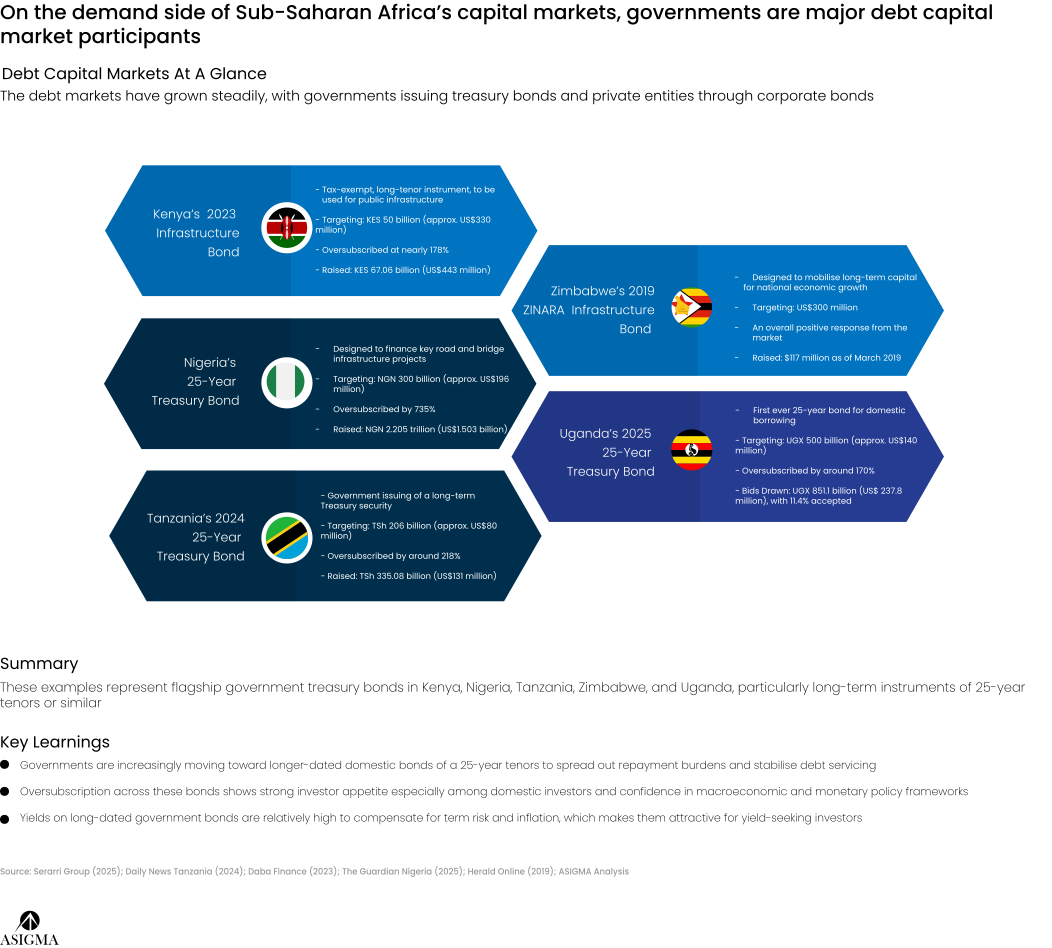
Governments remain the most active and consistent users of capital markets across Sub-Saharan Africa as shown in Illustration 2. Treasury bonds are regularly issued to finance critical sectors such as transport, energy, education, and health, and to manage budget deficits. These domestic instruments help reduce dependence on external debt and foster financial sector growth. The following examples demonstrate both the scale and success of these efforts:
- Kenya’s 2023 Infrastructure Bond targeting KES 50 billion (approx. US$330 million) was over subscribed at nearly 178% and raised KES 67.06 billion (US$443 million). With a yield of 17.93% and a tax-free structure, the funds were channelled into transport, energy, and water infrastructure showcasing the ability of domestic markets to mobilise resources for national development.
- Nigeria’s 2024 Series VII Sovereign Sukuk Bond, targeting NGN 300 billion (US$196 million) was oversubscribed by 735%, attracting US$1.503 billion in bids. The bond carries a 15.75% annual rental rate and is designed to finance key road and bridge infrastructure projects across the country. The strong investor appetite highlights the growing confidence in Sharia-compliant financial instruments and the government’s commitment to mobilizing long-term domestic capital for sustainable infrastructure development.
- Uganda’s 2025 25-Year Treasury Bond, the first of its kind, targeting UGX 500 billion (US$140 million) drew bids totalling UGX 851.1 billion, reflecting an oversubscription of 170%. With a yield of 16%, proceeds are earmarked for critical infrastructure development in energy, transport, and social services. This debut issuance demonstrates the growing role of domestic capital markets in mobilising long-term financing for national growth while providing attractive returns to investors.
- Zimbabwe’s 2019 ZINARA Infrastructure Bond, raised at US$117 million, was issued with a 7% coupon rate to finance critical road rehabilitation projects, including the Harare–Masvingo–Beitbridge highway and other national trunk roads, highlighting how domestic bonds are increasingly being leveraged to mobilise long-term capital to support national economic growth.
- Tanzania’s 2024 25-Year Treasury Bond targeting TSh 206 billion (approx. US$80 million) was oversubscribed by 218% and raised TSh 335.08 billion (US$131 million). With a yield of 15.41%, the proceeds were earmarked for infrastructure development in transport, health, and education, demonstrating the crucial role domestic bonds play in mobilising long-term capital for national growth while providing attractive returns to investors.
Illustration 2
Private Companies Raising Funds through Corporate Bonds
Private companies in Sub Saharan Africa are increasingly using corporate bonds to raise debt, moving beyond traditional bank loans. These bonds are gaining popularity because they provide access to larger funds, often at lower costs, and with longer repayment terms.
Examples of some key issuances include:
- Letshego Ghana Savings and Loans Plc issued a GHS 100 million (US$8.2 million) Senior Unsecured Dual Bond in 2024 which was oversubscribed by 31%. Proceeds were directed toward expanding its lending capacity, diversifying funding sources, and strengthening its position in Ghana’s fixed-income market.
- Kenya Mortgage Refinance Company (KMRC) issued a KES 1.4 billion (US$12 million) bond in 2022, oversubscribed by more than 400%. Proceeds were used to refinance concessional loans and support affordable housing, aligning private capital with Kenya’s broader housing agenda.
- Dangote Cement Plc launched an NGN 300 billion (US$345 million) Medium-Term Note Programme in 2021 to diversify its funding sources. The first tranche, a NGN100 billion (US$115 million) Series 1 bond was oversubscribed by 55%. The proceeds were used to refinance short-term debt and expansion projects, reflecting investor confidence in the company and the depth of Nigeria’s corporate debt market.
- National Bank of Commerce (NBC), issued the Twiga Bond, targeting TSh 30 billion (US$13 million) to expand lending to SMEs, agriculture, and businesses impacting women and youth. The offer was met with strong investor appetite, attracting TSh 38.91 billion and recording an oversubscription of 130%.
These bond issuances are helping to strengthen the depth of Sub-Saharan Africa’s capital markets, enabling companies to fund their initiatives in a more sustainable and strategic way.
The Rise of Thematic Bonds: Green Bonds
A notable development in the region’s capital markets is the emergence of green bonds, debt instruments that raise funds for environmentally sustainable projects. These bonds are attracting interest from investors aligned with ESG (Environmental, Social, Governance) mandates and global development finance institutions.
Key green bond issuances include:
- Acorn Holdings (Kenya) raised KES 4.3 billion (US$40 million) in 2019 for sustainable student housing, East Africa’s first green bond listed on both the Nairobi and London Stock Exchanges.
- Copperbelt Energy Corporation Plc (Zambia) issued a US$200 million Green Bond Medium-Term Note Programme to finance renewable energy projects. Proceeds are being used to develop the Itimpi Solar Project, reflecting strong investor confidence and growing demand for sustainable investment opportunities in Zambia’s energy sector.
- CRDB Bank (Tanzania) issued the Kijani Bond, the country’s first green bond, to fund climate-resilient infrastructure and renewable energy.
- The Government of Nigeria issued a US$112 million Sovereign Green Bond in June 2025 which was oversubscribed by 183%. Proceeds are being directed toward renewable energy and other climate-resilient infrastructure projects, reinforcing Nigeria’s commitment to green growth.
Illustration 3
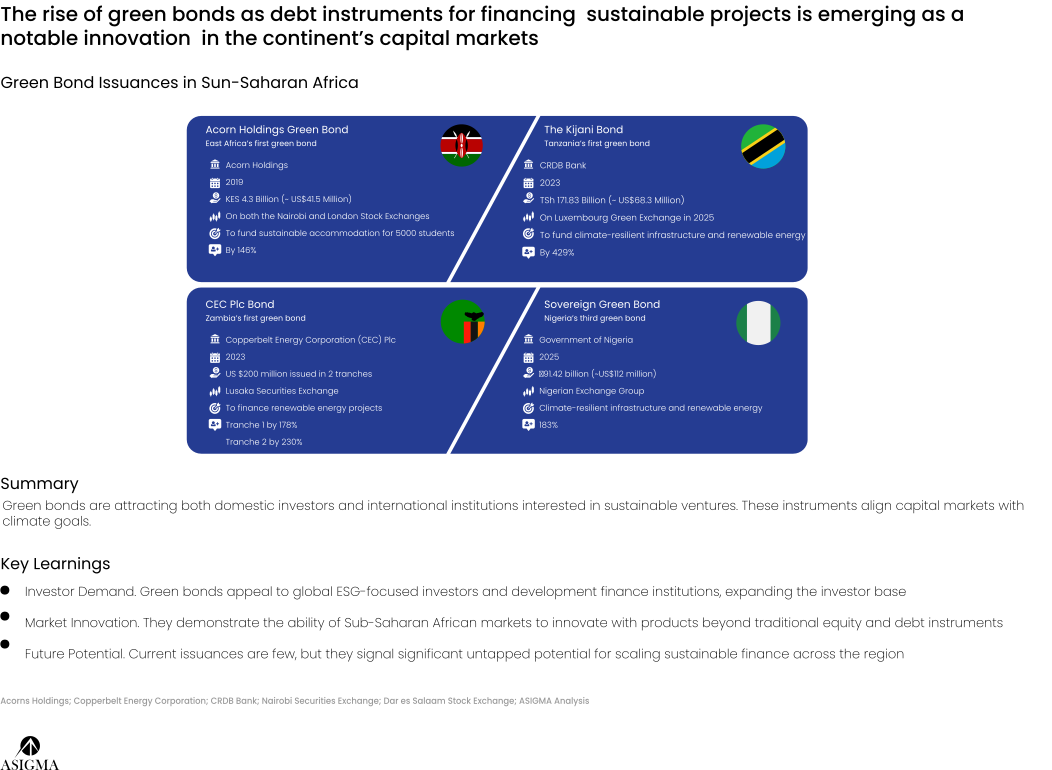
These thematic bonds show how capital markets can channel private investment into national climate and sustainability priorities, further deepening their economic impact.
Equity Capital Markets
The equity market in Sub Saharan Africa has seen increased activity over the past decade, with companies issuing shares to raise capital for growth and expansion. In addition to traditional share offerings, new instruments such as Exchange-Traded Funds (ETFs) and Real Estate Investment Trusts (REITs) are emerging, providing investors with more diversified opportunities and helping deepen the capital markets.
Equity Issuances in Sub Saharan Africa
Over the past decade, Sub Saharan Africa equity markets have witnessed a steady stream of activity through Initial Public Offerings (IPOs), rights issues, bonus share issuances, stock splits, and secondary market offers. This highlights both the appetite of companies to raise or restructure capital and the role of exchanges in providing platforms for economic growth.
Between 2015 and 2024, a total of 58 IPOs were recorded across Sub-Saharan Africa. Nigeria led with 23 IPOs, followed by Ghana with 9, Tanzania with 8, Malawi with 5, Kenya with 4, Rwanda and Uganda with 3 each, Zimbabwe with 2 IPOs and Zambia with 1 IPO.
Beyond IPOs, many companies turned to rights issues to raise additional capital from existing shareholders. There were 33 rights issues in the past decade, led by Nigeria and Ghana with 9 each, followed by Zimbabwe with 6, Kenya with 5, Malawi with 2, and Zambia and Rwanda with 1 rights issue each.
Bonus share issues have also been common because companies use them to strengthen balance sheets, reward shareholders and improve liquidity. In total, there have been 21 issuances, with 17 bonus issuances in Kenya and 4 in Uganda.
Other notable equity market events included two stock splits (Kenya Airways and Limuru Tea on the Nairobi Securities Exchange) and one secondary market offer (MTN Uganda in 2024), further diversifying the nature of capital market activity in the region.
This demonstrates that Sub Saharan Africa’s equity markets remain active and continue to provide companies with multiple avenues for raising capital and restructuring ownership.
Large Companies as Key Equity Market Participants
Large companies are issuing equity through public listings to meet their long-term funding needs, reflecting a growing maturity in the region’s private sector and a desire to diversify away from traditional bank financing.
Some of the notable share issuances include:
- Airtel Malawi Plc’s 2020 IPO, offering 1.65 billion ordinary shares at MKW 12.69 per share was oversubscribed by 34%, reflecting strong investor demand. Proceeds were allocated to support operational expansion and strengthen the company’s capital structure, reinforcing Airtel’s position as a leading telecom provider.
- Kenya Electricity Generating Company’s (KenGen) 2016 rights issue, which sought to raise KSh 28.8 billion (US$288 million) was oversubscribed by 337%. The proceeds were used to retire short-term debt, expand renewable energy projects and strengthen infrastructure, positioning KenGen to increase generation capacity. This issuance highlighted the strategic role of capital markets in supporting large-scale infrastructure and advancing Kenya’s clean energy agenda.
- I&M Bank Rwanda’s 2017 IPO, which raised RWF 11.5 billion (US$10.9 million) through the government’s sale of its 19.81% stake. Oversubscribed by 209%, the proceeds funded the construction of the Bugesera International Airport to enhance Rwanda’s connectivity and economic growth.
- OK Zimbabwe Limited’s 2025 rights issue was fully subscribed and raised US$20 million. The proceeds were directed toward funding capital expenditure, and upgrading ICT systems, aimed at stabilizing operations and restoring supplier confidence.
- Jatu Plc’s 2021 IPO which raised TSh 17.7 billion (US$7.5 million) was oversubscribed by 104%. The proceeds were earmarked for expanding commercial farming and value-addition, including maize, sunflower, and rice production, alongside investments in milling and processing facilities. This underscores how equity markets can mobilise domestic capital to support agribusiness growth and food security
Emerging Equity Instruments: Real Estate Investment Trusts and Exchange Traded Funds
A growing trend in Sub Saharan Africa is companies using alternative equity instruments to raise capital. Real Estate Investment Trusts (REITs) and Exchange-Traded Funds (ETFs) let issuers access targeted funding for real estate or sector-specific projects. Currently listed on the Nigeria Exchange Group (NGX), Nairobi Securities Exchange (NSE), Ghana Stock Exchange (GSE), and the Zimbabwe Stock Exchange (ZSE), these instruments offer a strategic alternative to traditional share offerings.
Below in Illustration 4 are the various equity instruments listed.
Illustration 4
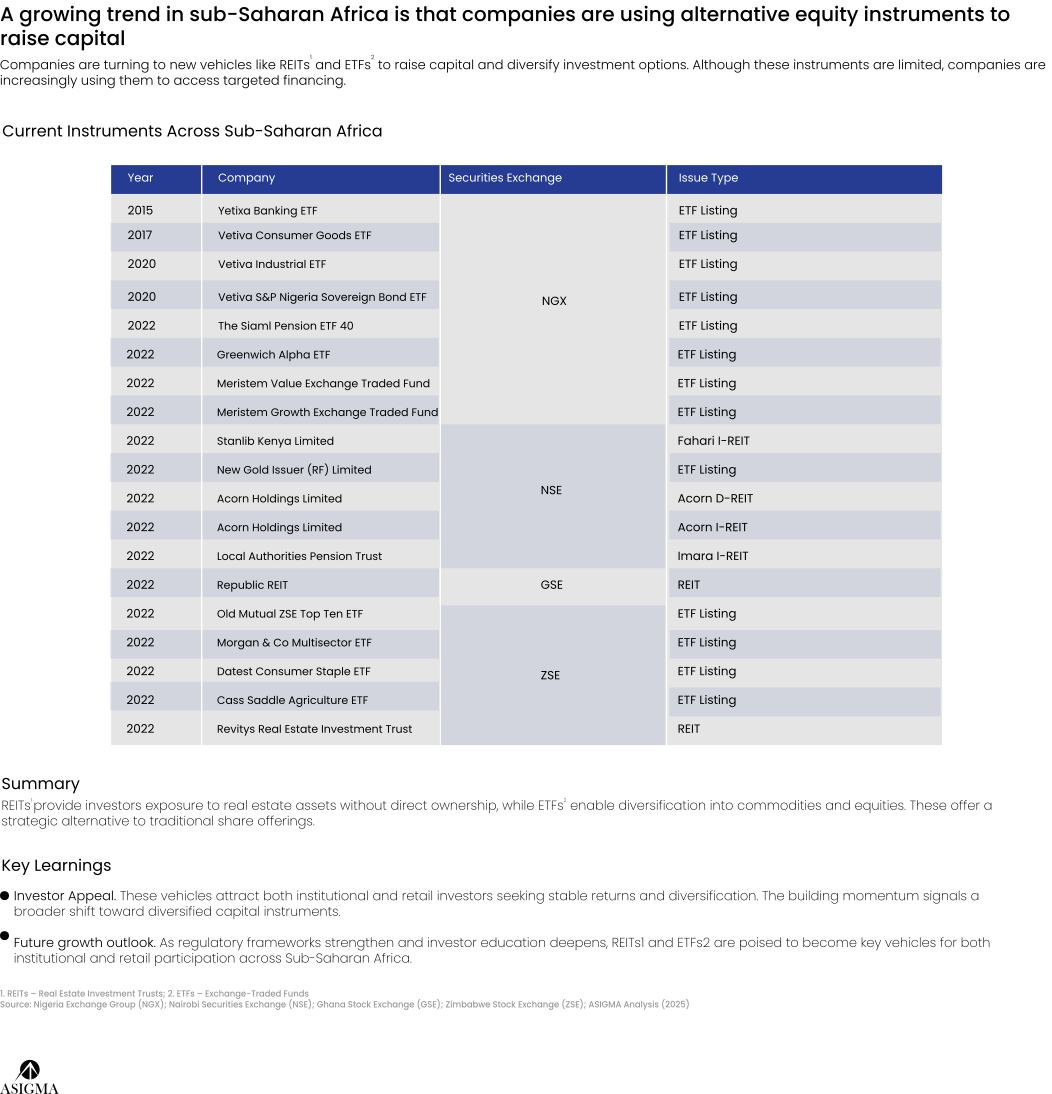
Although these instruments are limited, companies are increasingly using them to access targeted financing. As more issuers recognise the advantages such as unlocking the value of income generating assets and reaching a broader pool of investors, the activity is expected to grow, contributing to the diversification of Sub-Saharan Africa’s capital markets.
Efforts to Unlock SME Demand: The Rwanda Investment Clinic and the Ghana Alternative Market
While governments and large firms have increasingly leveraged capital markets to raise funding, small and medium-sized enterprises (SMEs), the backbone of Sub-Saharan Africa’s economy remain largely excluded. High issuance costs, complex regulatory requirements, and investor risk perceptions have created significant barriers, making it difficult for smaller enterprises to access financing through public markets.
As a result, SMEs are often forced to rely on traditional bank lending that may also be out of reach for most, ultimately constraining their growth, innovation, and contribution to broader economic development.
However, promising innovations are emerging in the region such as the Rwanda Investment Clinic and the Ghana Alternative Market.
Rwanda Investment Clinic
The Rwanda Investment Clinic is a program led by the Capital Market Authority in partnership with FSD Africa and the International Finance Corporation. The clinic helps SMEs prepare for capital market participation through advisory services, legal and financial readiness support, and matchmaking with investors, with the goal to transition promising companies from informal or bank-dependent models to long-term financing via debt and equity markets.
Two notable success stories from the initiative include:
- Mahwi Grain Millers Ltd raised RWF 1.5 billion (US$1.3 million) in 2024 through a corporate bond to expand its grain processing capacity and improve logistics, helping to strengthen its operations.
- Prime Energy Plc issued Rwanda’s first SME green corporate bond, raising RWF 9.5 billion (US$6.6 million) to expand off-grid solar systems and mini-grids in rural areas.
Ghana Alternative Market
The Ghana Alternative Market (GAX) is an SME-/growth-oriented equity platform under the Ghana Stock Exchange, founded in 2013 to enable small and medium enterprises to raise public capital more easily. It offers less stringent requirements such as lower minimum capital, reduced fees, and a dedicated support fund and underwriting assistance to help with pre-listing advisory and regulatory costs.
Two notable success stories:
- Samba Foods Ltd listed on GAX in 2015 through an IPO, raising GHS 2.5million (US$161,000) to expand its production base and acquire equipment to scale its food processing capacity and export readiness.
- DigiCut Production & Advertising Ltd raised just over GHS 28million (US$1.8million) through its GAX listing in 2018, issuing 35 million shares to investors. The proceeds were used to enhance its advertising/production capacity and expand operations.
These initiatives show that with the right support and tailored instruments, SMEs can become active players in capital markets unlocking a new layer of inclusive and long-term economic growth.
Illustration 5
The Supply Side of Capital Markets in Sub-Saharan Africa
For capital markets to function, they need investors who are willing to allocate funds in exchange for returns. In Sub-Saharan Africa, this includes institutional investors like pension funds, insurance firms, and asset managers, as well as retail investors.
These investors seek returns through interest payments on bonds, dividends from listed companies, or capital gains. When investments yield positive returns, investors are incentivised to reinvest, deepening market activity. In turn, companies and governments can access more financing driving investment, innovation and economic growth across the region.
When Investment Pays Off: Returns from Sub-Saharan Africa’s Capital Markets
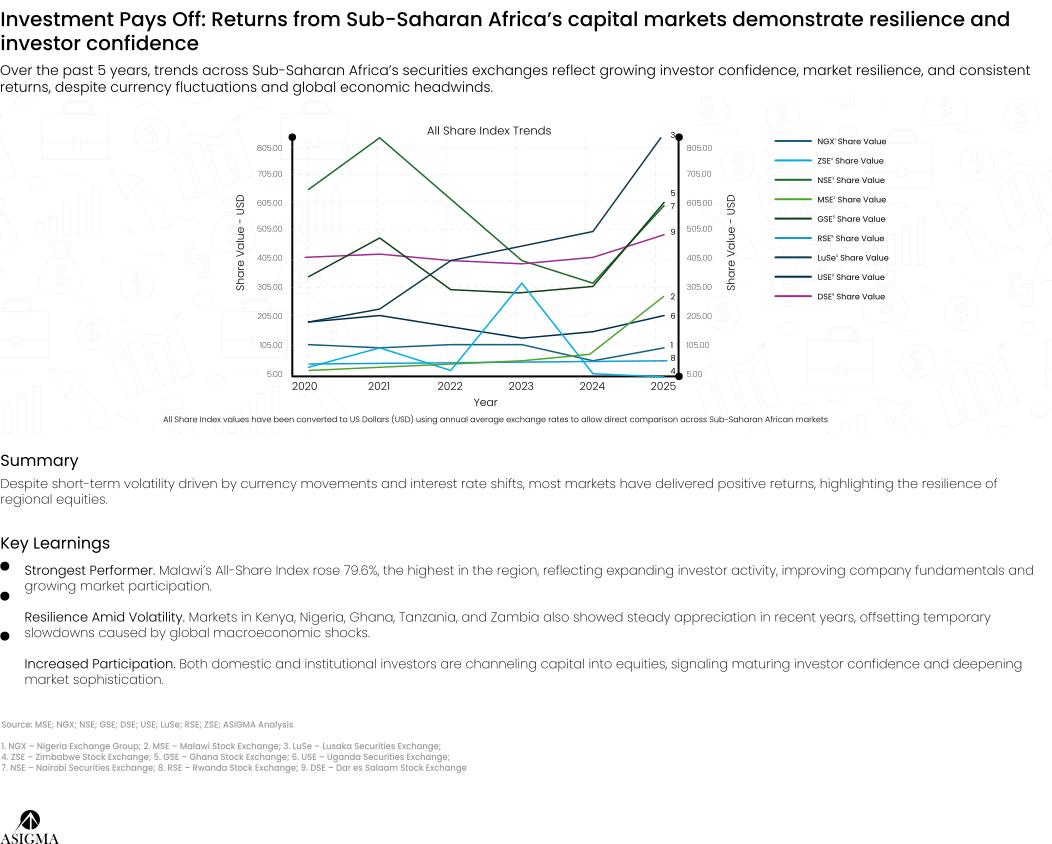
To understand how well investors are being rewarded, trends in the all-share indices of Sub-Saharan Africa’s securities exchanges over the past five years highlight market performance and provide insight into the profitability of investing in the region’s equities.
Illustration 6
Conclusion
Capital markets are playing an increasingly important role in financing Sub-Saharan Africa’s long-term economic development. Governments continue to issue Treasury bonds to fund infrastructure and public services, while large corporations are leveraging both equity and debt markets to finance growth, innovation, and expansion.
However, access to these markets is mainly skewed toward established firms that issue shares or corporate bonds. Small and medium-sized enterprises (SMEs) continue to face significant barriers, including high listing costs, complex regulatory procedures, and limited internal capacity.
Efforts such as Rwanda’s Investment Clinic and the Ghana Alternative Market are beginning to address these challenges by supporting SMEs to become issuer ready. The successful market entry of firms like Mahwi Grain Millers in Rwanda and DigiCut Production & Advertising Ltd in Ghana shows that, with the right support, SMEs can raise capital through public markets and contribute meaningfully to national development.
From the investor side, there is growing participation in the capital markets, and these players are increasingly allocating capital in search of returns and regional instruments are delivering. Over the last five years, the All-Share Indices for the various Securities Exchanges have shown resilience despite global headwinds, with Malawi Stock Exchange providing the highest return of 79.6%. This highlights that Sub Saharan Africa’s markets are rewarding investors while channelling their savings into productive enterprises that drive economic growth.
Capital markets are steadily influencing economic growth in Sub Saharan Africa by mobilising long-term financing for governments and businesses, while offering investors consistent returns. However, this impact can be increased by expanding access for SMEs and strengthening the investor environment. Enhancing regulatory transparency, improving market awareness, and building investor confidence will be key to increasing participation, ensuring that capital markets become a more inclusive and powerful driver of the region’s development.
Disclaimer:
The information, numbers and data on Sub-Saharan Africa’s capital markets in the article above is not ASIGMA’s proprietary data. It is a consolidation of records that are publicly available from the respective stock exchanges, as well as industry sources that have been hyperlinked in the respective segments of the article.
Furthermore, the analysis and comments in this article are for informational purposes only and do not constitute investment, financial, or trading advice. Investors should conduct their own due diligence and consult with a qualified professional before making any investment decisions.